Why This Fails Locally
South Riding's houses mostly went up around 2006, a good two decades newer than the median build year across the wider Leesburg service area, which sits closer to 1986. That gap matters more than it sounds like it should. A door installed in the mid-2000s almost always came with a factory torsion spring sized to a lighter, thinner steel panel than what you'd find on an older house. The spring itself is a different wind count, different wire gauge, sometimes a different drum size on the cable.
When a spring fails on a 2006-era door, the fix isn't "grab a spring off the shelf that fits most doors." It needs to match the door weight and track geometry the builder specified, or the opener will strain, the cables will wear unevenly, and you'll be back here in a year. We carry stock for this generation of builder-grade hardware because so much of what we see out this way is the same handful of door and spring combinations repeated across the development.
This is also why a page written generically for "garage door spring repair" doesn't tell you much. The fault pattern in a neighborhood built in 2006 is not the fault pattern in a neighborhood built in 1985, even if both doors are technically the same brand.
Where This Job Goes Sideways
This area sits in a cold, severe winter climate band, and torsion springs lose temper faster under repeated cold-to-warm cycling than most owners expect. On a newer door, the spring is usually sized tighter to the panel weight to begin with, so there's less margin before a fatigued spring starts showing up as a door that won't fully open or a loud bang when it finally gives.
Extension spring assumption
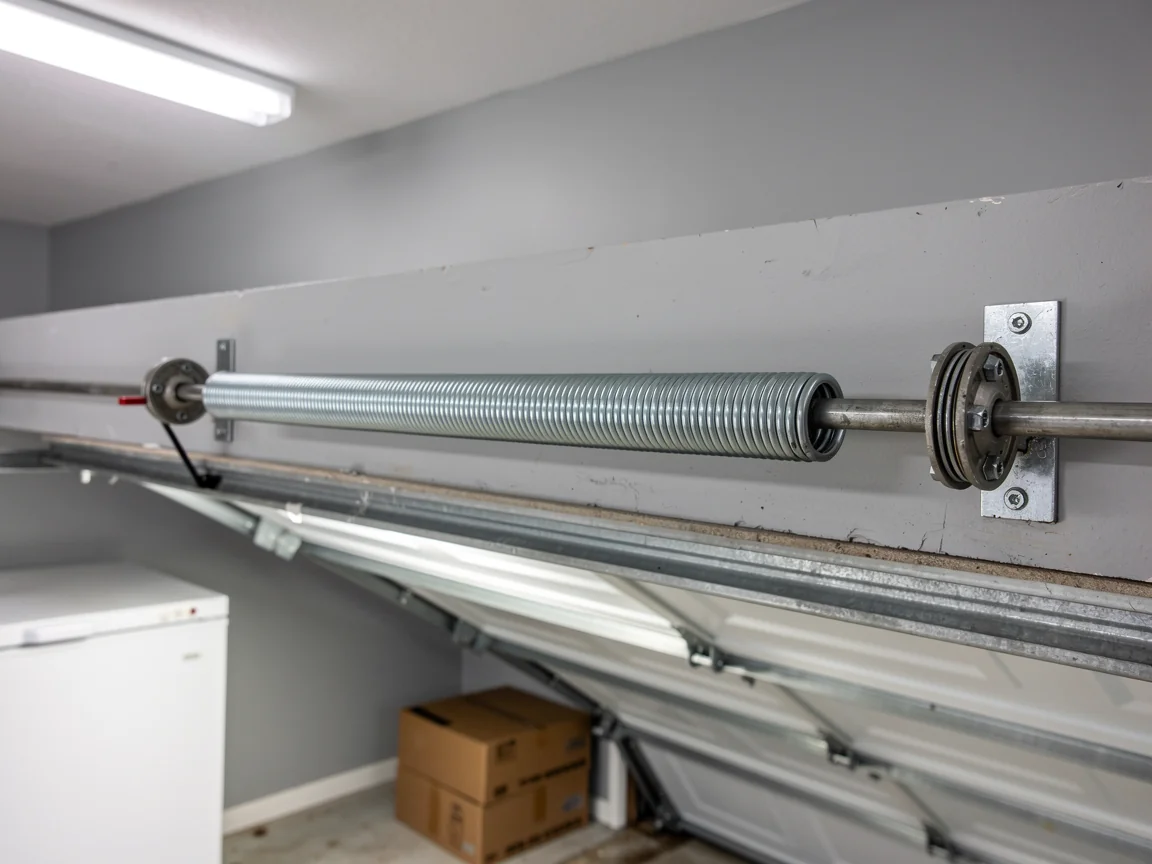
The other way this goes sideways: homeowners assume a 2006-era door still uses an extension spring setup, because that's what a lot of the older stock in this region runs. Most of what we find in South Riding is torsion spring on a steel shaft above the door, not the side-mounted extension springs common on 1980s and 90s construction elsewhere in the service area.
Identify system before pulling
Working on the wrong system with the wrong tools is how people get hurt. If you're not sure which you have, don't start pulling on anything - tell us what the hardware looks like over the phone and we'll know before we arrive.
Discontinued opener part delay
One honest limitation: if your opener is an older proprietary unit that was discontinued by the manufacturer, a matching replacement part can take longer to source than the spring repair itself. We'll tell you up front if that's the holdup, rather than guess at a timeline.
Getting It Booked In
We run out of Leesburg, about 14 miles from South Riding, so there's no local branch or depot here - every job means a drive.
Truck stocked by sizes
That's worth saying plainly rather than implying we're around the corner. What it does mean is the truck is stocked for the torsion spring sizes and cable lengths that match the builder-grade doors common to this area, so the drive doesn't turn into a second trip because we didn't have the right spring on board.
Describe sag or refusal
When you call, tell us the door's approximate age and whether you've noticed it sagging on one side, slamming down, or refusing to open at all. That's usually enough for us to know which spring setup we're walking into and to bring the right wind-up bar and clamps rather than a generic kit.
No blanket same-day promise
We don't give a blanket same-day promise for every call in South Riding - it depends on where the truck already is that day - but we will tell you straight when we can get there instead of leaving you guessing.
What You Are Seeing
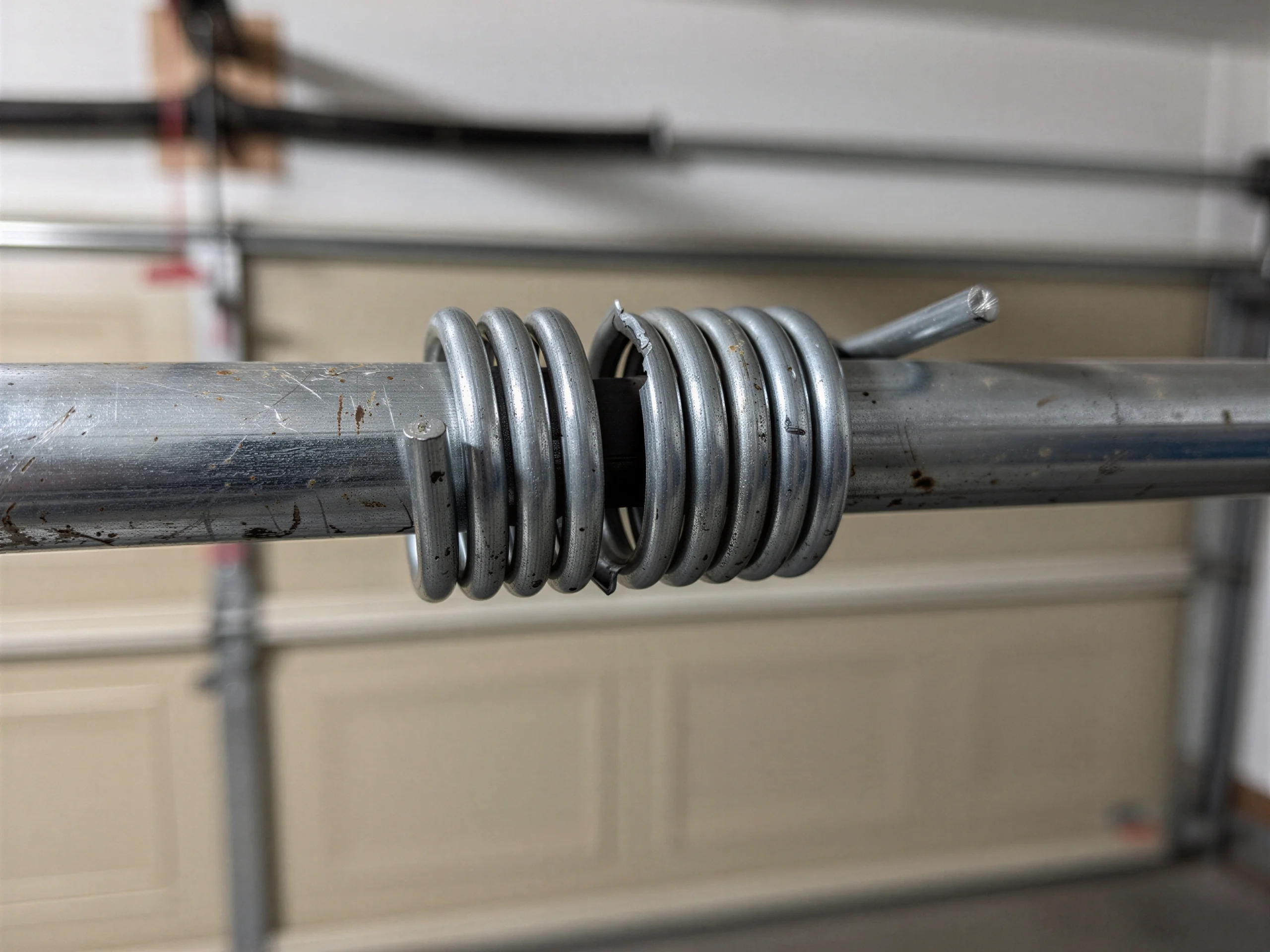
A door that won't lift past a foot or two, or one that slams down fast instead of lowering under control, is almost always a broken or failing torsion spring - the kind standard on the 2006-era builder stock that makes up most of South Riding. You might also notice the cable gone slack on one side, or the opener straining and reversing itself partway through a cycle because it's trying to lift a door with no spring tension helping it.
A spring that's simply worn out from winter cycling, rather than snapped, sometimes shows up more subtly - the door feels heavier to lift by hand than it used to, or the opener's motor runs louder for a few seconds before it catches. Either way, don't keep running the opener through a stuck or slammed cycle. That's how a spring repair turns into a spring-plus-track-plus-opener repair.
Talk to a local pro
Garage door service in Leesburg?
Same-day service with honest, upfront quotes.