Why This Fails Locally
Most houses in South Riding went up around 2006, which puts them well past the 1993 federal requirement for photo-eye safety sensors on automatic openers. That one fact changes what breaks. You're not dealing with the old extension-spring setups or bare wood panels that show up in older stock elsewhere in the county. You're dealing with steel sectional doors on torsion hardware, nylon rollers, and openers built with logic boards and safety reversal circuits.
South Riding's median household income of $190,701 tells you something too - a lot of these garages shipped with insulated doors, keypad entry, and belt or chain-drive openers rather than the stripped-down units builders used to cut cost decades earlier. That's not a bad thing. It just means when something fails, it's more often a sensor knocked out of alignment, a board that's lost its memory, or a roller that's worn through its nylon sleeve after fifteen-plus years of daily cycles, not a door that's simply reached the end of its life.
With close to 10,429 households built inside roughly the same twenty-year window, the pattern repeats block to block. When one garage in the area has a failing opener board, the neighbor two doors down is usually not far behind.
Where This Job Goes Sideways
The climate here runs cold and hard in winter, and that's rough on anything electronic. The circuit boards in these 2000s-era openers are more sensitive to a hard freeze than the mechanical relay units that came before them, and we see boards act erratic or quit outright during the first real cold snap of the season - not because the door is old, but because the board inside the opener head is.
Vinyl seals crack
Weatherseal is another spot where newer doesn't mean trouble-free. The vinyl bottom seals and side seals on doors from this era go brittle and crack in cold weather faster than owners expect, and a cracked seal lets in enough draft and moisture to seize a track or freeze a bottom panel to the slab overnight.
Uncommon board not stocked
Here's the honest limitation: if your opener is a less common brand or an older proprietary circuit board from this build era, the exact replacement board isn't always something we carry on the truck.
Same-visit opener swaps
Full openers we can usually swap same visit. A specific board for a specific model sometimes means a short parts wait, and we'll tell you that up front instead of promising a fix we can't deliver that day.
Getting It Booked In
We run these calls out of Leesburg, 14 miles from South Riding, so there's real drive time built into any visit - we won't pretend otherwise.
Describe the door's behavior
When you call, tell us what the door is doing: stuck open, stuck shut, opener running but door not moving, or a spring that's let go. That tells us what's riding on the truck before we're on the road.
Security concern priority
If the door is stuck open and you've got a security concern, say so when you call - that changes how we prioritize the stop. If it's stuck shut and the car's trapped inside, same thing. We'd rather know the real situation than show up guessing.
Routine service pointers
For ongoing service needs beyond an emergency call, the South Riding garage door service page covers routine maintenance and non-emergency repair. For the full rundown on how we handle emergency calls out of our Leesburg base, see the Leesburg emergency repair page.
What You Are Seeing
A door that opens partway and reverses on its own is almost always a sensor out of alignment or a sensor lens fogged or blocked - common on these photo-eye-equipped openers once the brackets get bumped by a bike or a garbage can.
Blink code lookup
A door that won't move at all, with the opener light blinking a set number of times, usually means the board is throwing an error code you can look up by the blink pattern.
Bang plus release cord
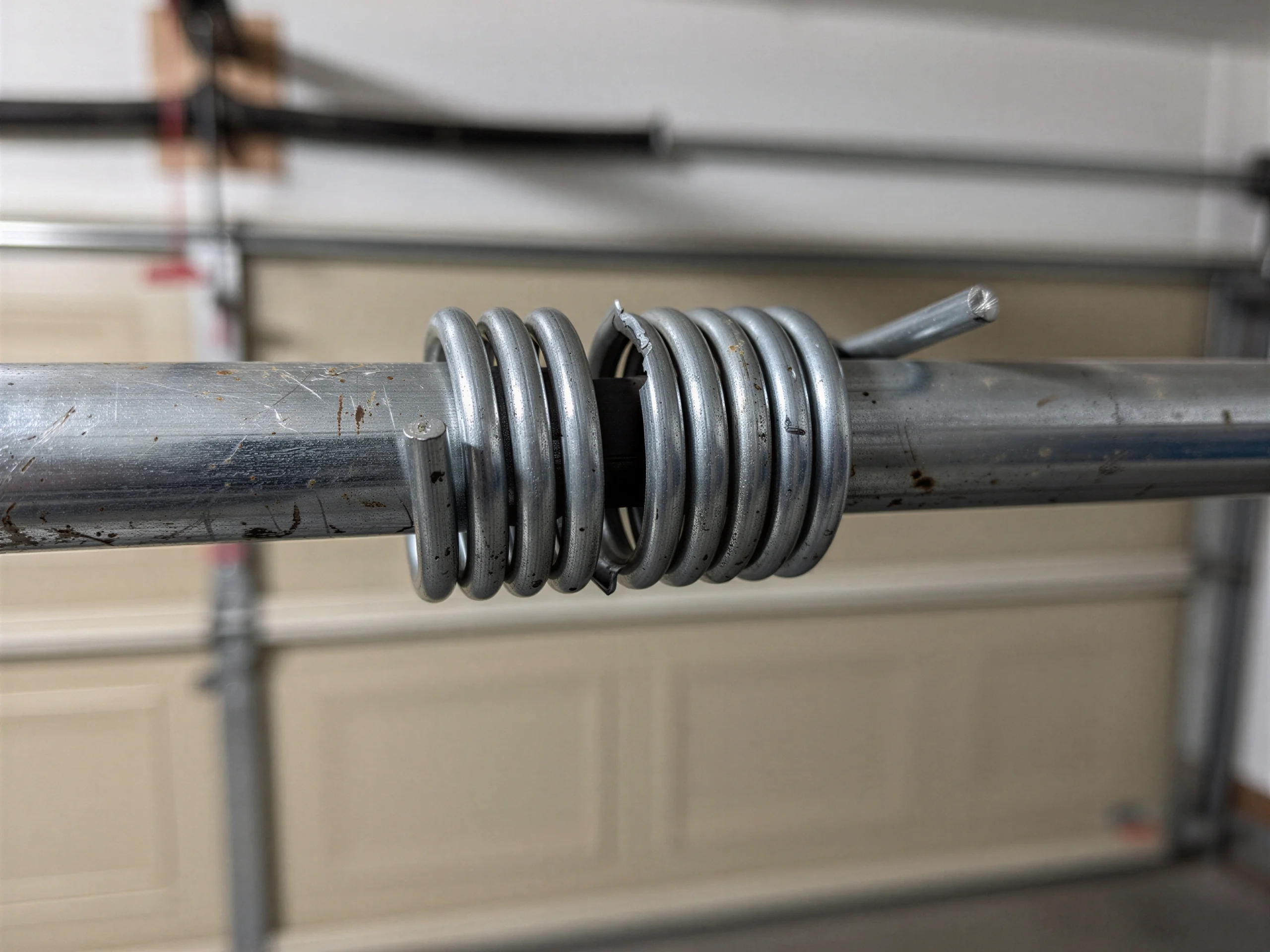
A loud bang followed by the door refusing to open under power, but moving if you pull the release cord, points to a broken torsion spring - common once a spring hits the end of its cycle count, regardless of the door's age.
Cracked nylon rollers
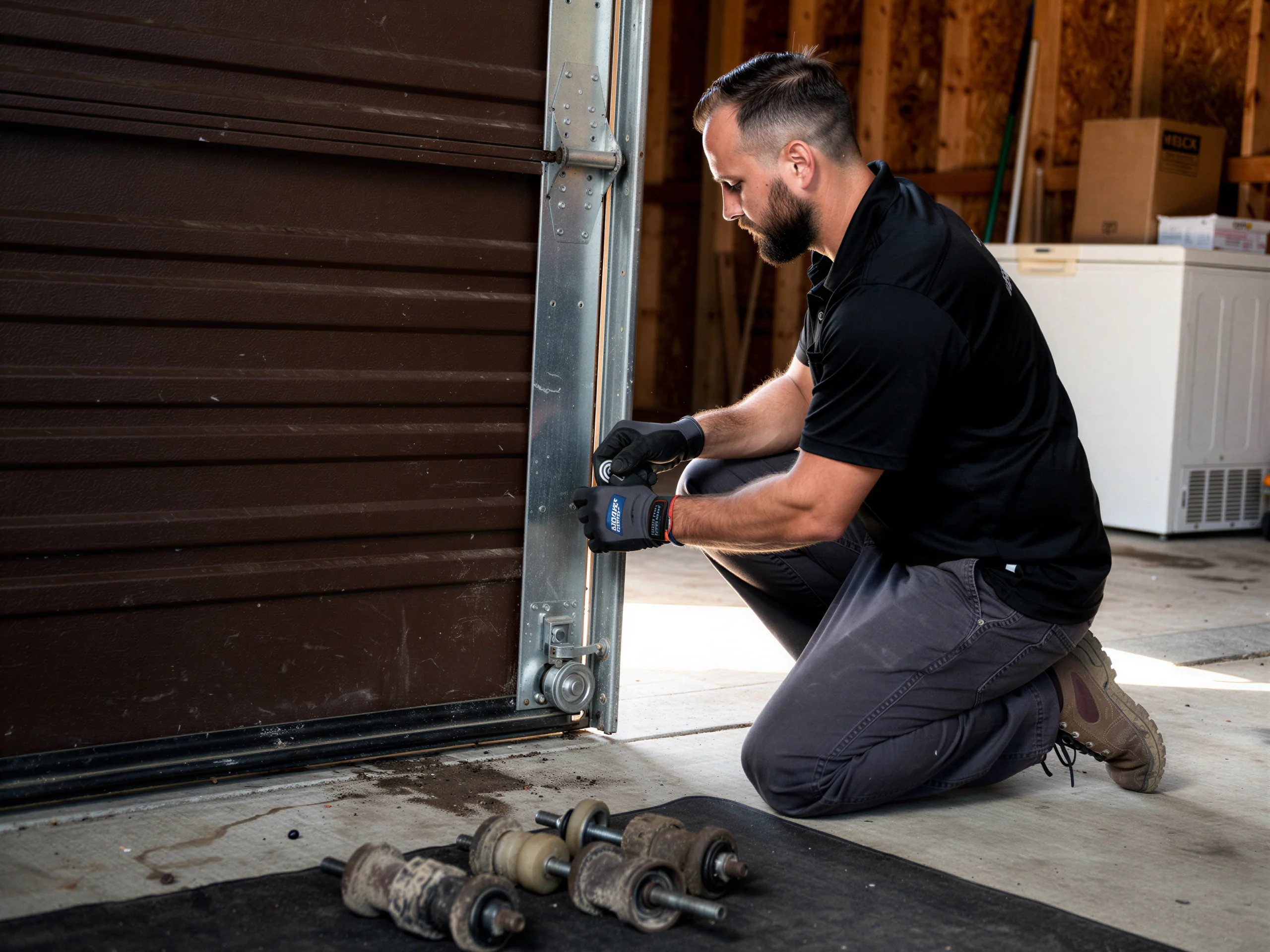
Rollers that grind or a door that judders partway through its travel often mean worn nylon rollers, the plastic kind original to doors from this era, finally cracking after years of use. If the door reverses only in cold weather and runs fine once the garage warms up, that's often a seal or hardware clearance issue made worse by the cold, not a sign the opener itself is failing.
Talk to a local pro
Garage door service in Leesburg?
Same-day service with honest, upfront quotes.