What the Fix Involves
Most calls in Leesburg start with one of three things: a torsion spring that's let go, an opener that's stopped talking to the wall switch, or a track that's pulled loose from the jamb.
Hand balance test
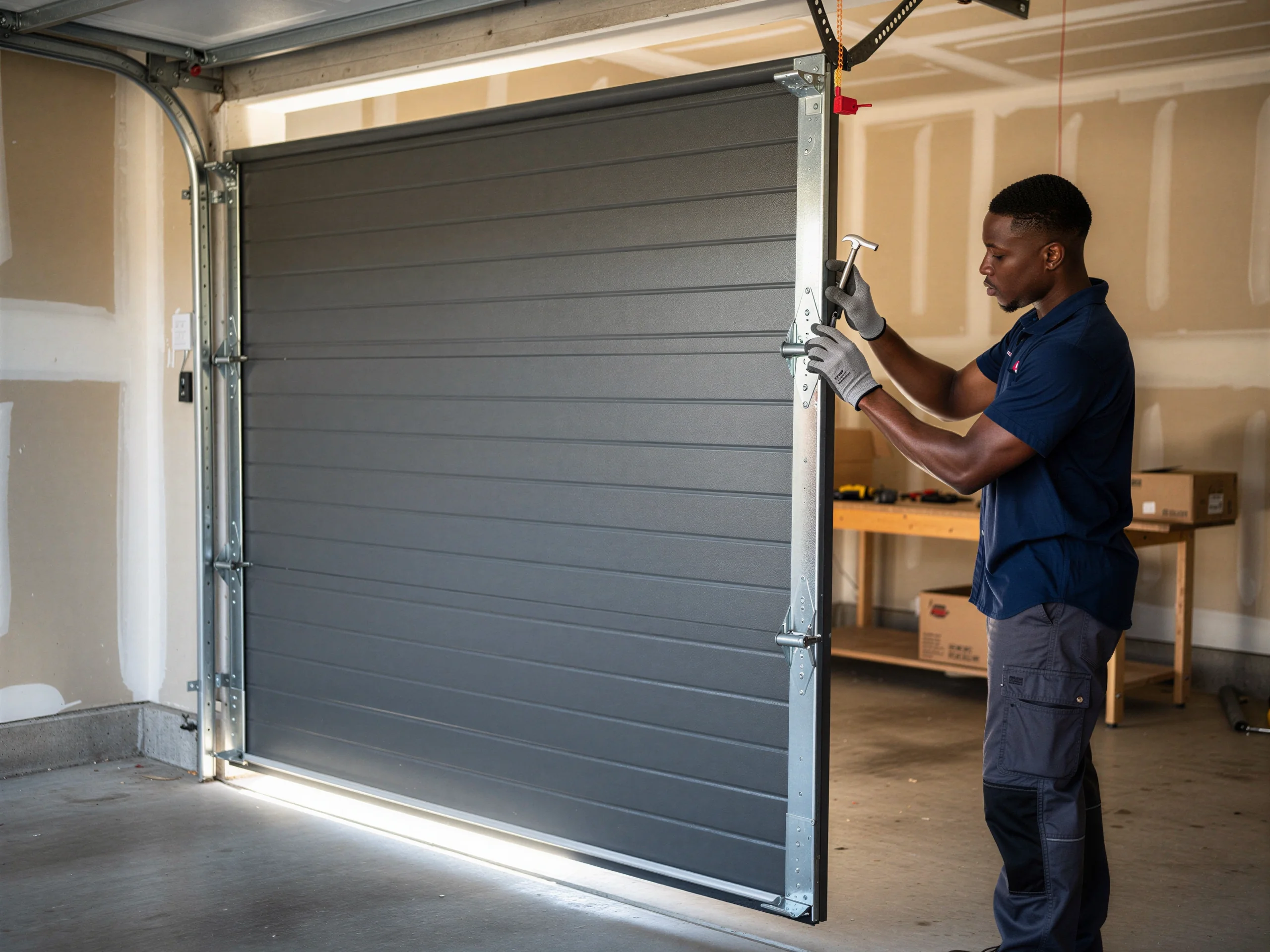
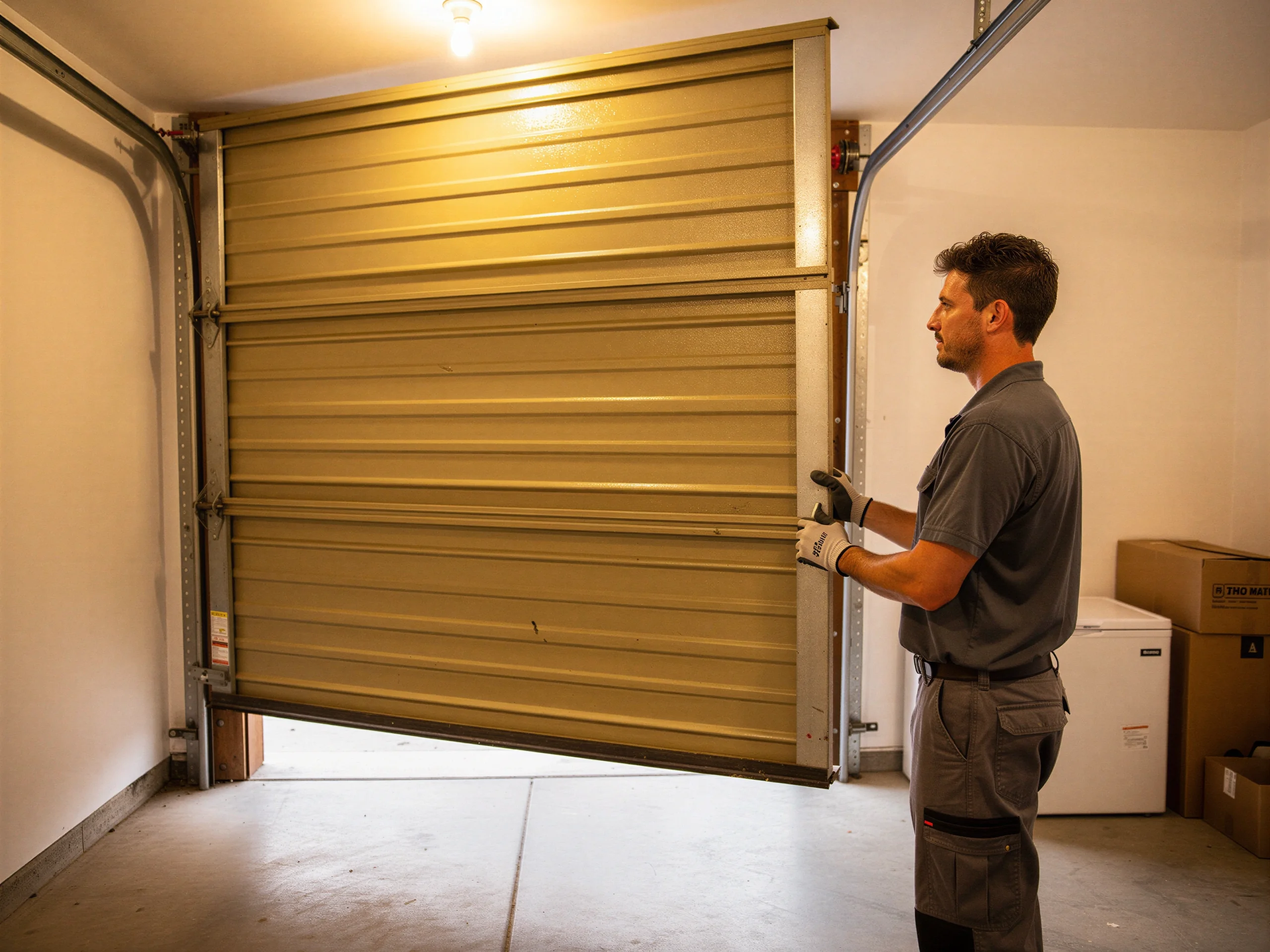
The fix depends on which one it is, but the process is the same. We open the door by hand first to check balance - a door that won't stay put at waist height has a spring problem, not an opener problem, no matter what the remote is doing.
Unwinding under tension
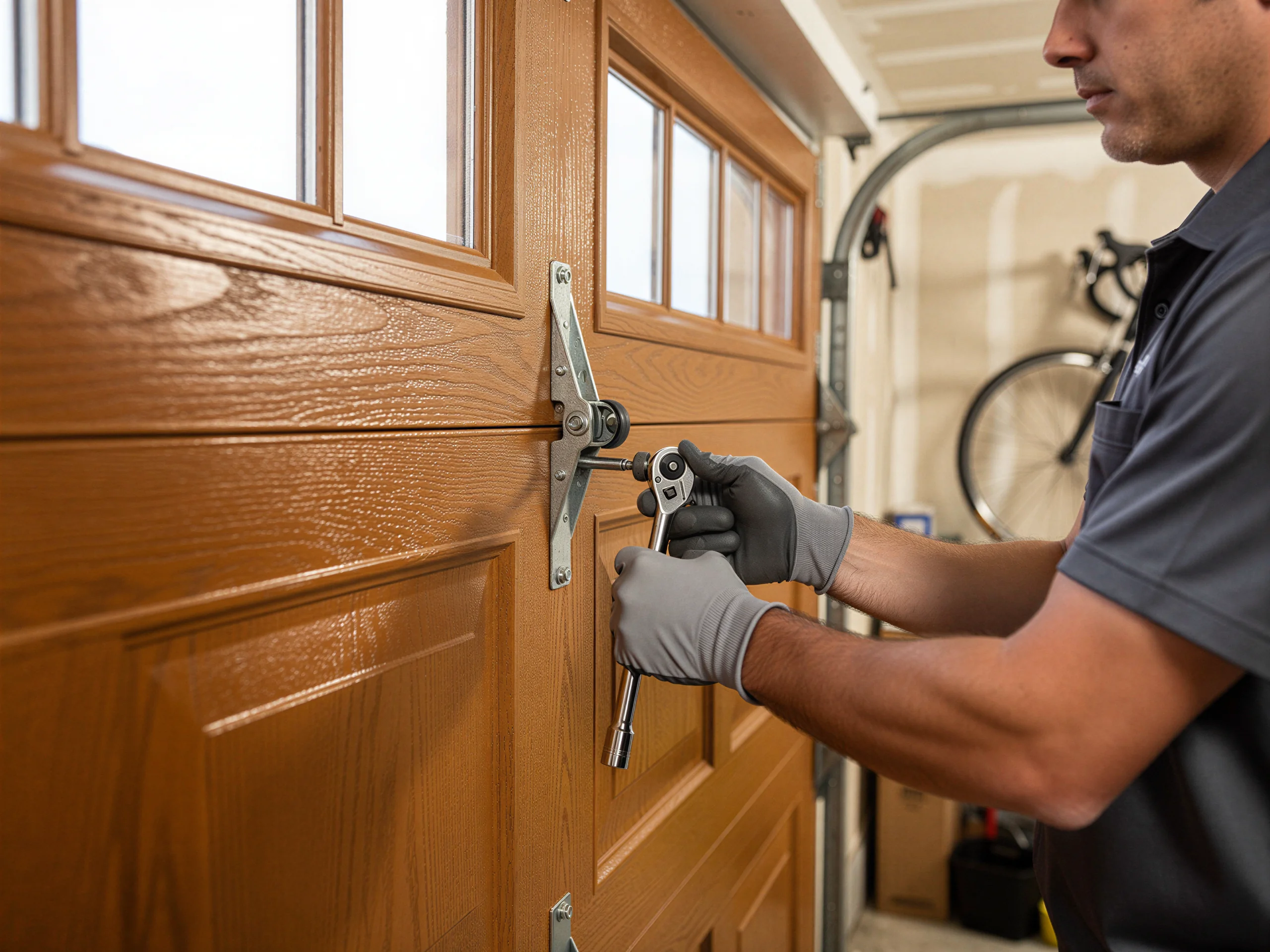
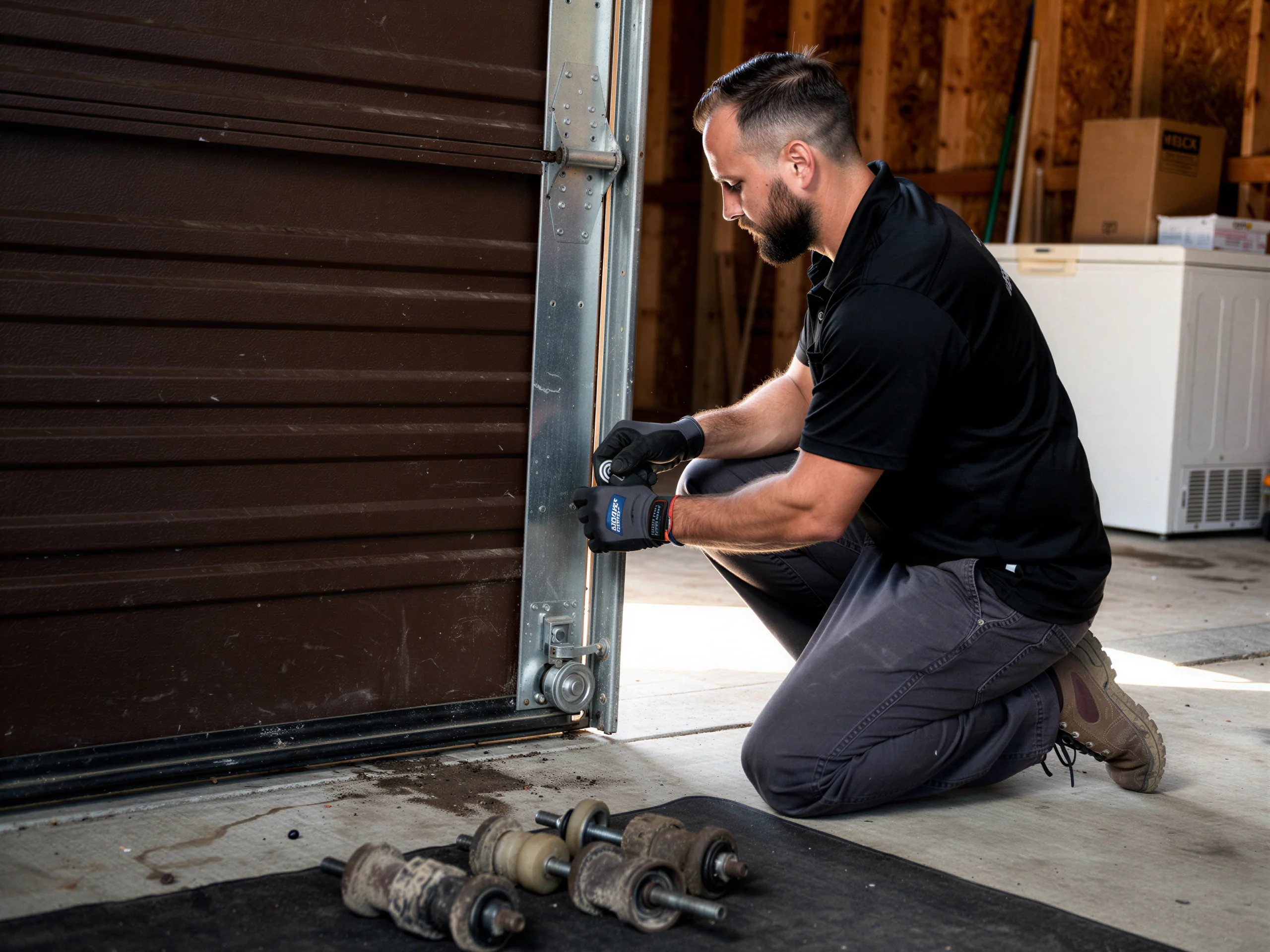
Then we check the tracks for plumb, the rollers for wear, and the cable drums for fraying. On a torsion spring job, we unwind the old spring under tension with winding bars, pull it, measure wire gauge and coil length against the door weight, and wind in the replacement to the right number of turns.
Stripped plastic gears
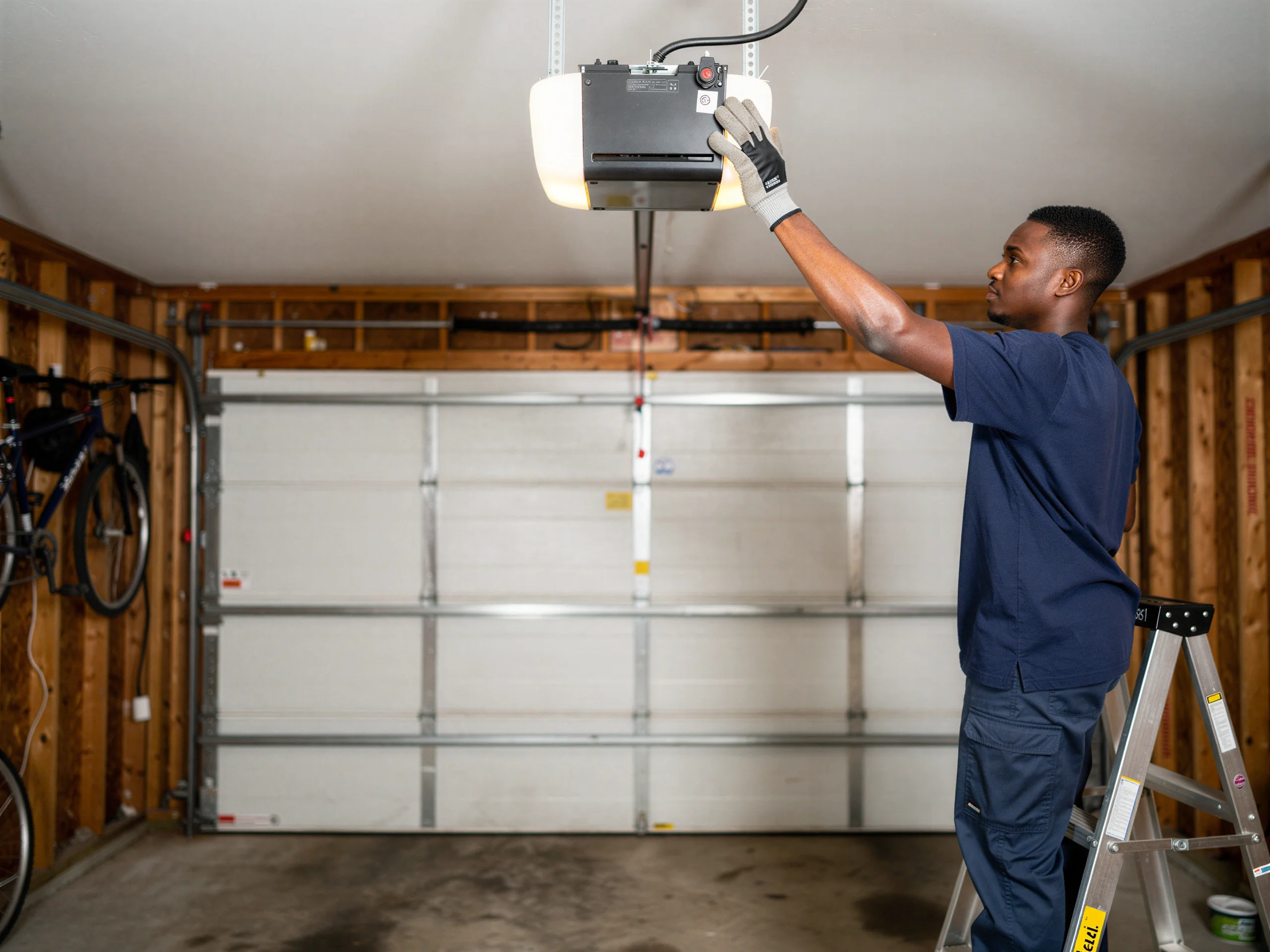
On an opener job, we check the logic board, the drive gear, and the travel limits before we touch the motor - half of what looks like a dead opener is a stripped plastic gear, not a burned-out motor. We don't replace parts that are still within spec just because they're old.
Roller-only versus replacement
If a spring has years of cycle life left and the only issue is a worn roller, that's what gets quoted. A full door replacement only comes up when the panels themselves are bent, rusted through, or the door predates the current track width - not as a default answer to a stuck door.
What Is on the Truck
The inventory is built around what actually breaks on the doors common to this area: torsion springs in the wire gauges that fit single and double residential doors, extension spring sets for the older low-headroom setups still found on some of the pre-1980s houses, steel and nylon rollers, galvanized lift cables, and drum and bearing kits.
Logic boards and gears
We carry logic boards and drive gears for the opener brands most common on homes built from the 1980s through the 2000s, along with wall consoles and safety sensor pairs. What we don't carry is custom millwork doors, insulated panels in every color and R-value combination, or parts for openers discontinued more than a couple of decades back.
Specialty parts lead time
If a job needs one of those, we order it and give you a real lead time instead of guessing - a part that has to come from a specialty supplier can take longer than the repair itself, and we'd rather tell you that up front than have you waiting on a truck that isn't coming.
One-visit spring jobs
For anything on a standard torsion or extension setup, sized to a single or double door, the part is usually on the truck already, which is why most spring and roller jobs finish in one visit.
What You Are Seeing
The door that won't go up without help, or drops fast on the way down - that's spring tension gone, and it's the single most common call.
Worn drive gear
A door that reverses halfway up for no reason, or that opens on the second or third button press, points to a worn drive gear or a limit switch that's drifted out of calibration, both common once an opener's logic board has run a decade or more of cycles.
Flat-worn roller noise
A grinding or popping sound right as the door starts moving is usually a roller that's worn flat on one side, not a track problem, even though it sounds like metal on metal at the track. A door that sits crooked in the opening, with a gap wider on one side, means a cable has stretched or a track has pulled slightly away from the framing - common on older jambs that have settled over the decades.
Sudden spring failure
And a door that worked fine yesterday and won't budge today, with no warning sound or slow decline, is almost always a broken spring - the kind of failure that happens on a single bad cycle, not gradually. None of these show up the same way twice, which is why a phone diagnosis is a guess and an in-person check is the only real answer.
Why This Fails Locally
Leesburg's housing stock runs from 1938 to 2015, with the median year built sitting at 1986, and most of what's on the ground across the area's thirteen named neighborhoods went up in the 1980s and 90s. That matters because torsion springs and opener drive systems have a working life measured in cycles, not years, and a house with a door original to its 1980s or 90s build is now running hardware at or past the end of that life - which is exactly the age bracket generating most of the calls we get.
Leesburg sits in a climate band classified as severe cold, and that changes how the failure happens, not just when. Galvanized spring steel stiffens in hard cold, grease in old bearings and drums thickens, and a spring that's been losing tension slowly all year is more likely to let go on the first real cold snap than on a mild afternoon. Waterford is six miles out, Purcellville eight, and Round Hill eleven - close enough that the same cold front hits every one of those driveways within the same week, which is why service calls cluster right after a hard freeze rather than spreading evenly across the year.
With a median household income of $176,841 across the service area's roughly 36,086 households, and about 21,877 of those owner-occupied, most owners here replace a failing opener or spring set before it strands a car in the garage, rather than waiting for the door to fail completely.
Talk to a local pro
Garage door service in Leesburg?
Same-day service with honest, upfront quotes.