What the Fix Involves
Most garage door calls in this service area break down into one of two jobs: a torsion spring that's let go, or an opener that's stopped talking to the wall button and the remote at the same time.
Manual balance check
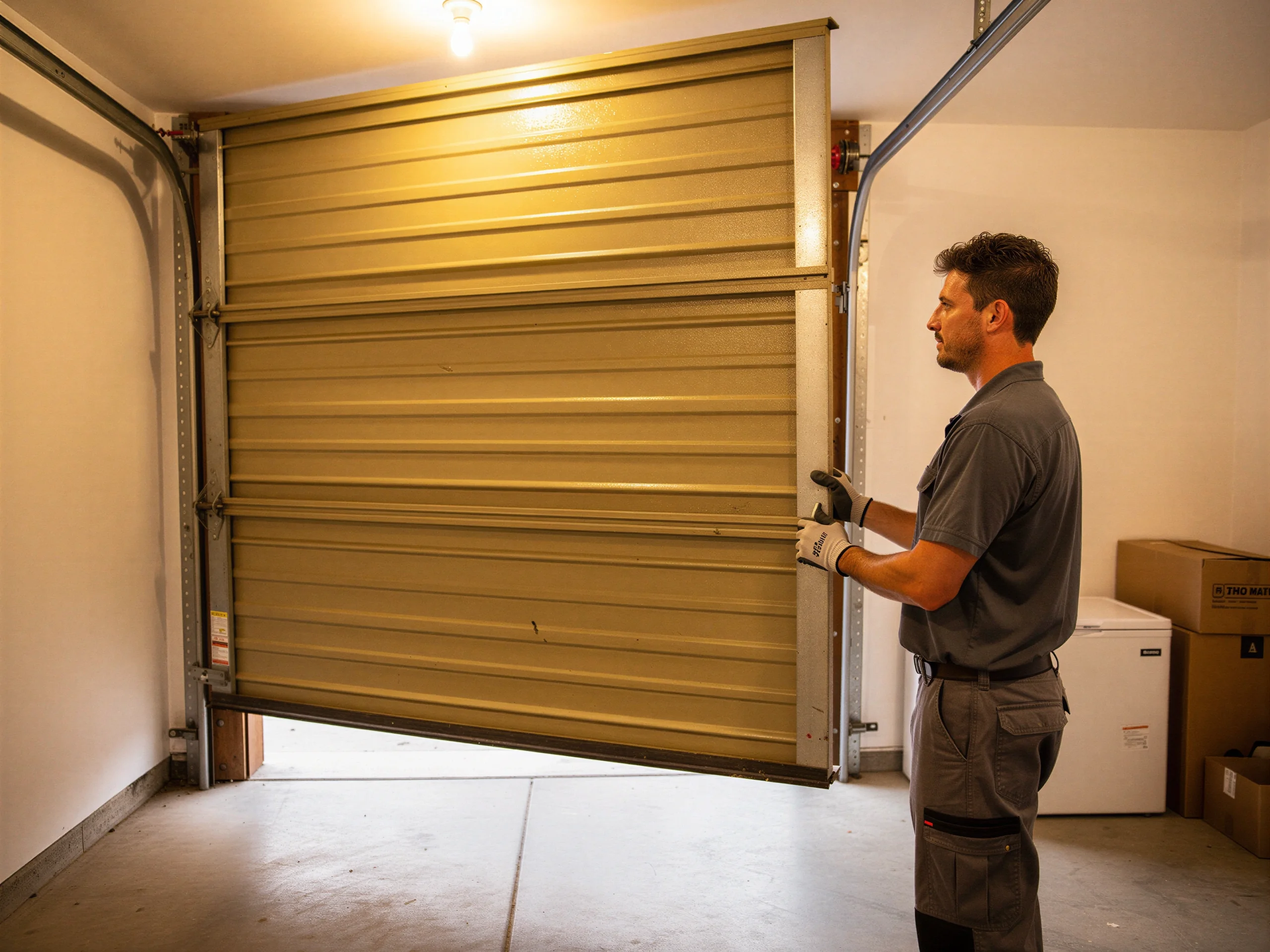
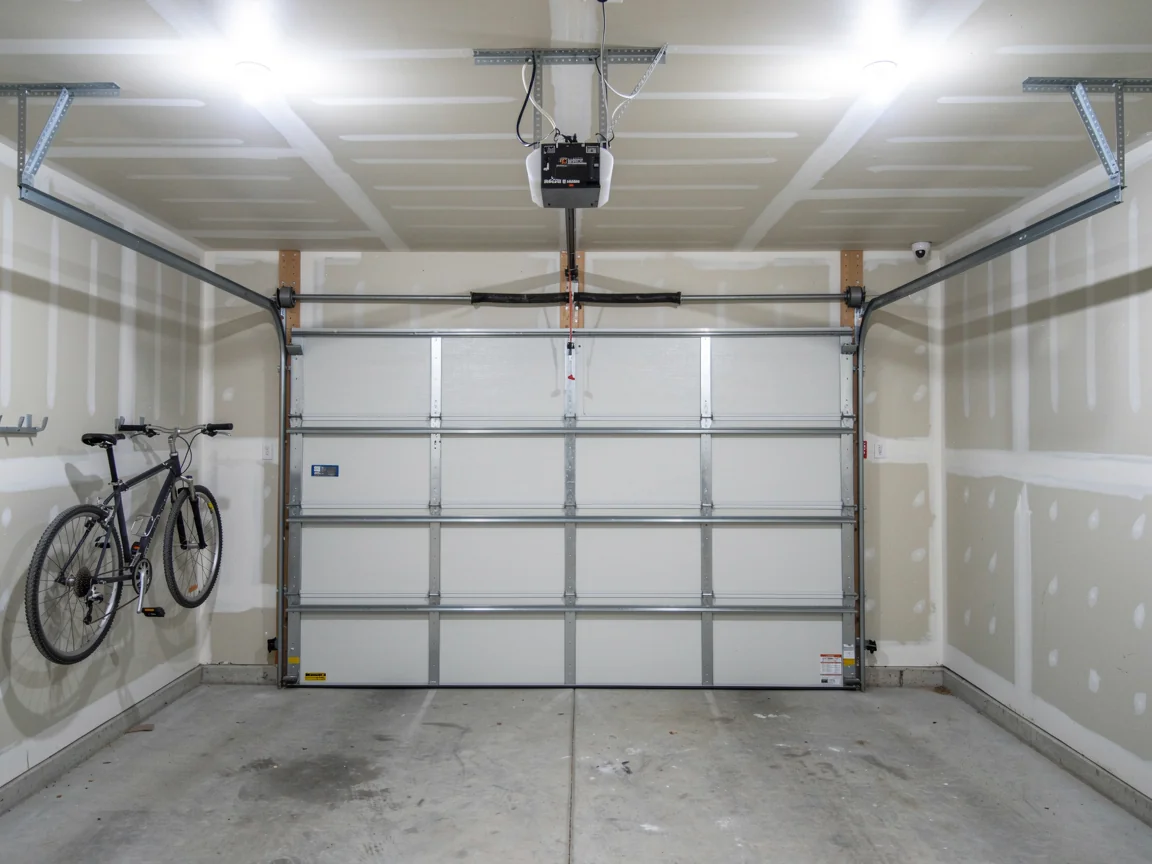
We start by pulling the door off the opener manually and checking it balances on its own - if it drops or shoots up, the spring is doing less than it should, and no amount of opener adjustment fixes that. With housing in this area running from 1938 up through 2015, and the bulk of it sitting in that 1980s-to-90s build window, we're usually looking at a torsion spring system on a steel track, not the older extension-spring setups you'd find on the handful of pre-1960s houses still standing.
Matching spring to weight
That matters because the spring, the drum, and the cable all have to be matched in size and wind to the door's weight - guess wrong and the door either won't lift or it slams. Once the spring work is sorted, we check the opener's travel limits and force settings.
Drifted limit switches
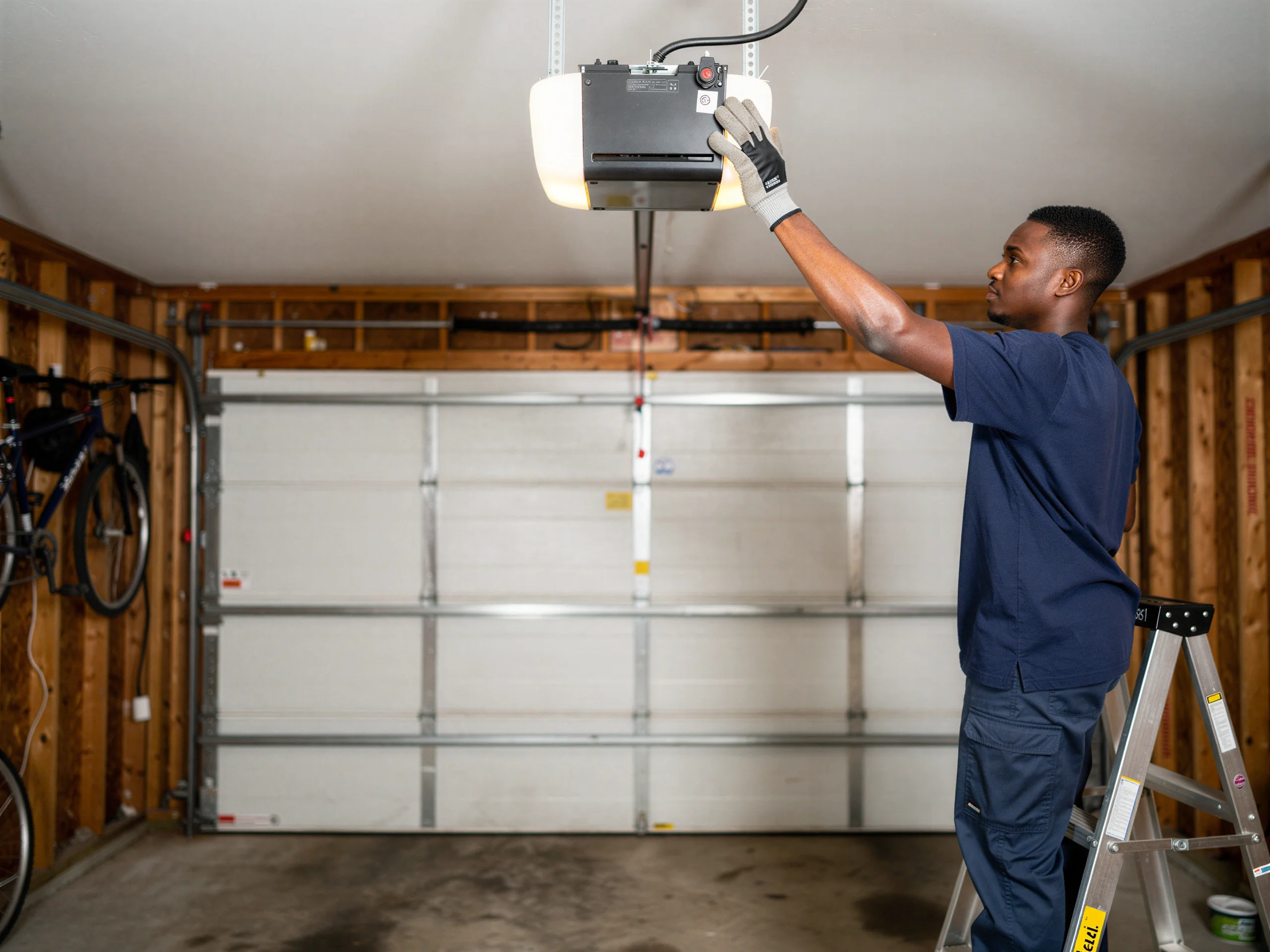
A door that reverses halfway up, or that closes and immediately bounces back open, is almost always a limit switch or force setting that's drifted out of range over years of seasonal temperature swings, not a dead opener. We adjust before we replace.
What Is on the Truck
For the spring and cable side of the job, we carry torsion springs in the common wind sizes and gauges that fit 1980s and 90s builder-grade doors - the stock that makes up most of what's on the ground here.
Cable, drums, rollers
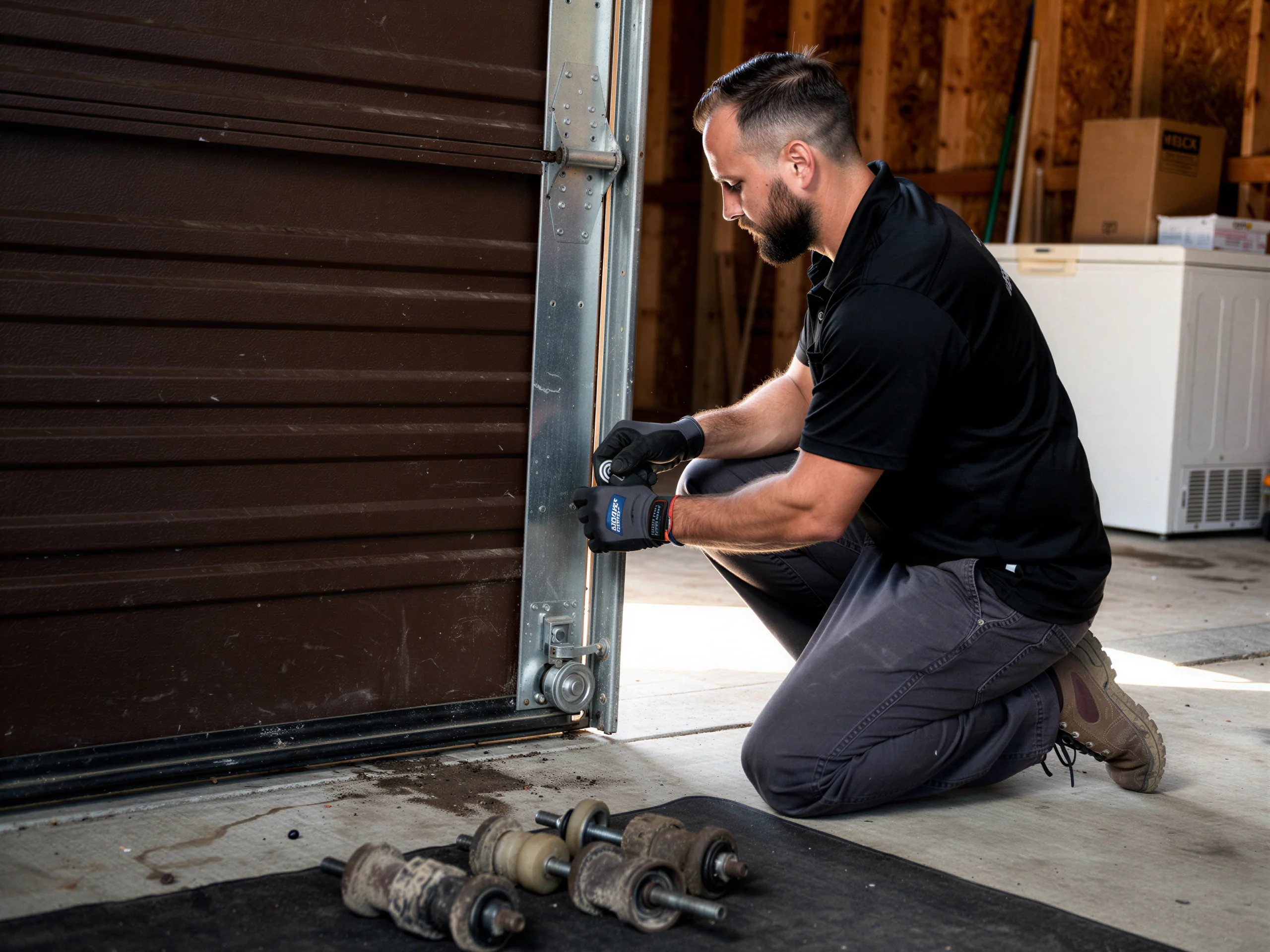
We also carry galvanized lift cable, drums, and the steel rollers that replace the nylon ones once they've worn flat from years of cold-weather use. On the opener side, we stock logic boards and limit switch assemblies for the openers most common to homes built in that same window, plus wall buttons and standard remotes.
Pre-1985 motors not stocked
What we don't carry on the truck is obsolete opener motors for doors built before the mid-1980s - if your house is one of the older ones in the 1938-on range and the opener itself has failed rather than a part inside it, that's sometimes a special-order motor, and we'll tell you straight if that's the case rather than string out a repair that won't hold.
Torque tools for springs
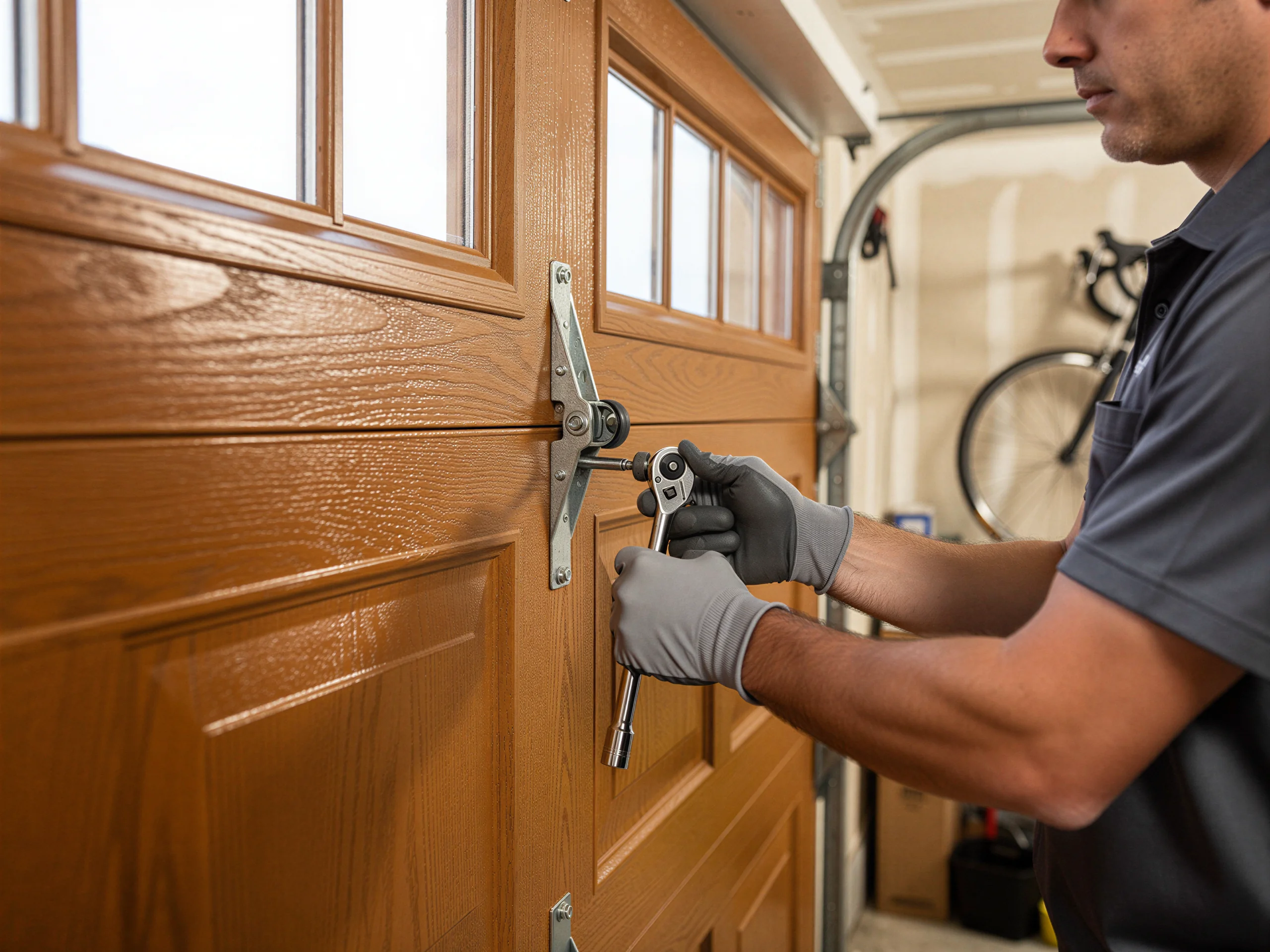
We also carry a torque wrench set for high-cycle torsion springs, since the sizing on cold-rated springs can run tighter than what a hardware-store spring kit offers, and getting that wrong on a heavy door means a comeback call within the year.
What You Are Seeing
The most common symptom we get called out for is a door that's suddenly heavy - it was fine yesterday, and today it won't budge past knee height, or it drops the last foot instead of settling.
Cracked winding cone
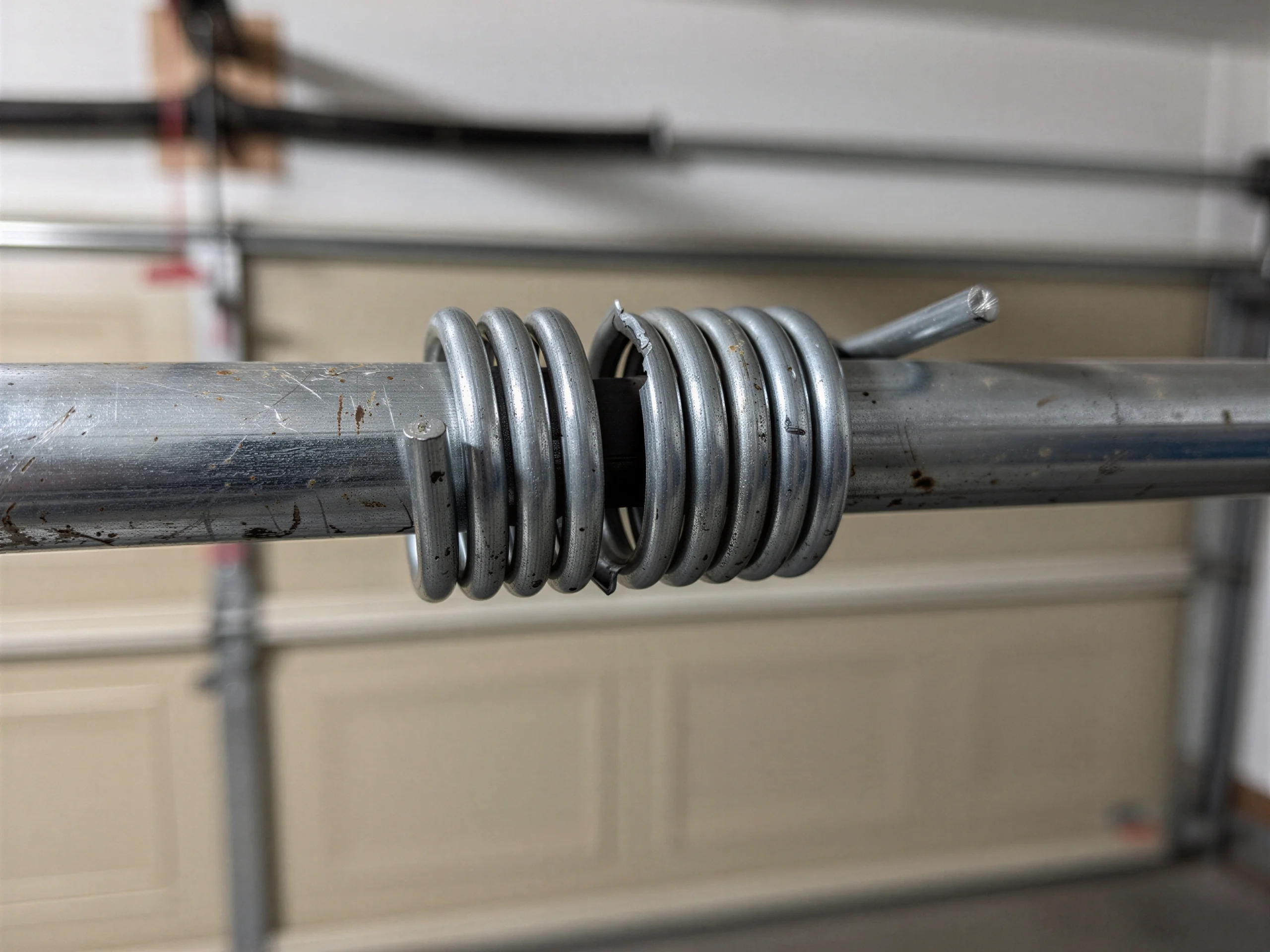
That's a torsion spring that's cracked or come off its winding cone, and it happens more in winter here because cold metal is less forgiving of fatigue than warm metal. The second pattern is a loud bang from the garage, usually first thing in the morning, followed by a door that won't move at all.
Bang means spring failure
That bang is the spring itself failing under tension, not the door hitting something. Third is an opener that runs but the door doesn't move, or moves an inch and stops. That's almost always a broken cable or a disconnected trolley, not the motor - the opener is doing its job, the door just isn't attached to it anymore.
Sensors blocked by grime
Less dramatic but just as common: a door that reverses before it closes, which usually traces back to a safety sensor that's been bumped out of alignment, or dirty sensor eyes from a season of road salt and dust blown in off the driveway.
Why This Fails Locally
The reason spring failure shows up so often in this area isn't bad luck - it's the combination of housing age and climate. With median construction landing around 1986 and most of the stock across the service area's named neighborhoods dating from that same 1980s-90s stretch, a large share of doors out there are now 30 to 45 years into a torsion spring's working life, right in the window where metal fatigue catches up with daily cycling.
Layer on the climate: this area sits in a cold-severe band, which means steel hardware goes through real temperature swings across a year, not a mild coastal cycle. Cold steel is more brittle under load, so a spring that's already near the end of its cycle count is more likely to snap on a 20-degree morning than a mild one. We see the same pattern repeat across the service area, whether the house sits closer to Waterford six miles out or further toward Purcellville or Brambleton - age and climate matter more than which side of the area you're on.
One honest limitation: if a spring has already failed and bent the shaft or cracked a drum on its way down, that's not a spring-only fix anymore, and we'll say so before we quote it as one.
Talk to a local pro
Garage door service in Leesburg?
Same-day service with honest, upfront quotes.