What the Fix Involves
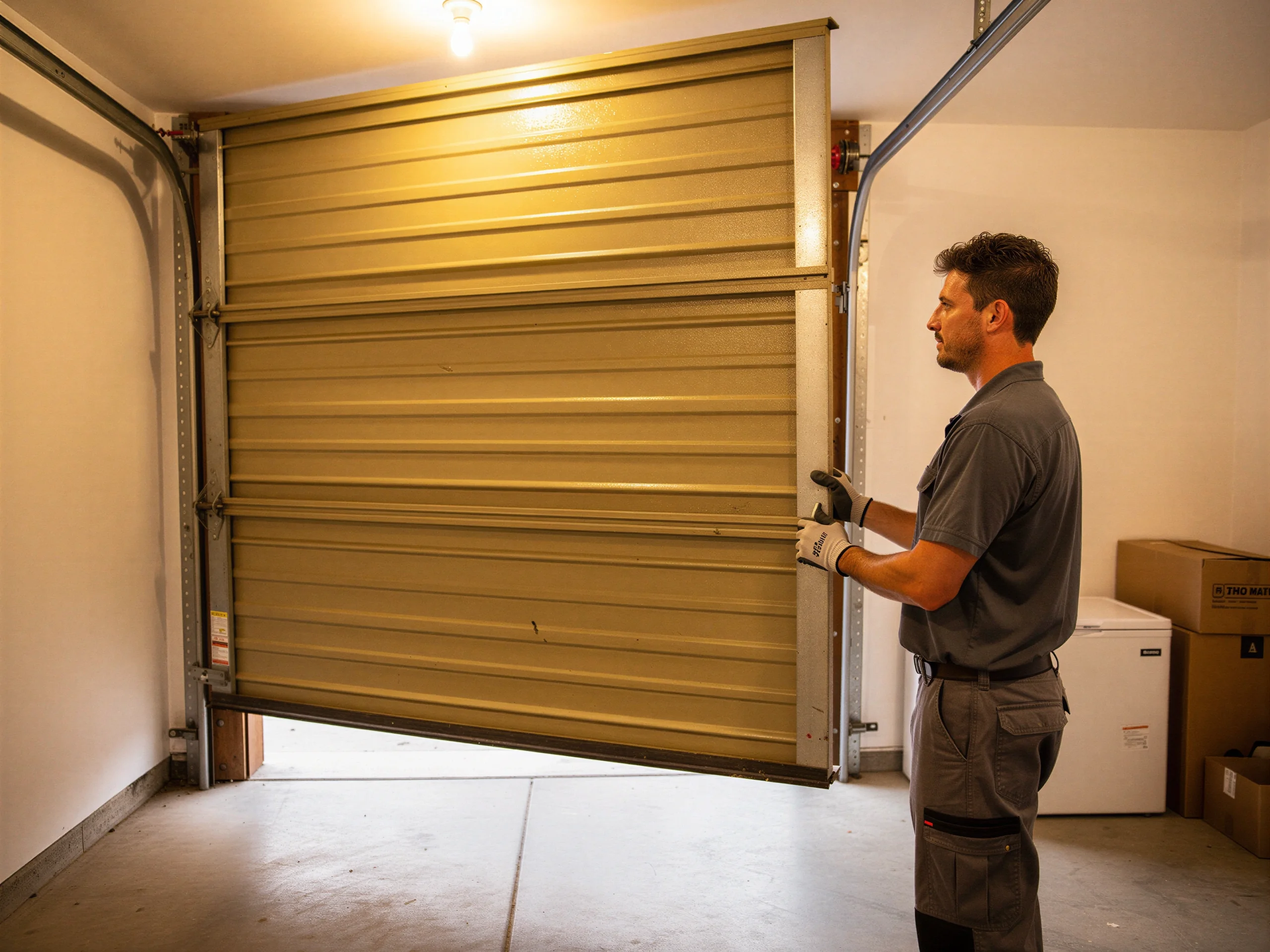
An emergency call means the door is stuck, the spring has let go, or the opener has quit and the car is trapped one way or the other.
Safety before touching
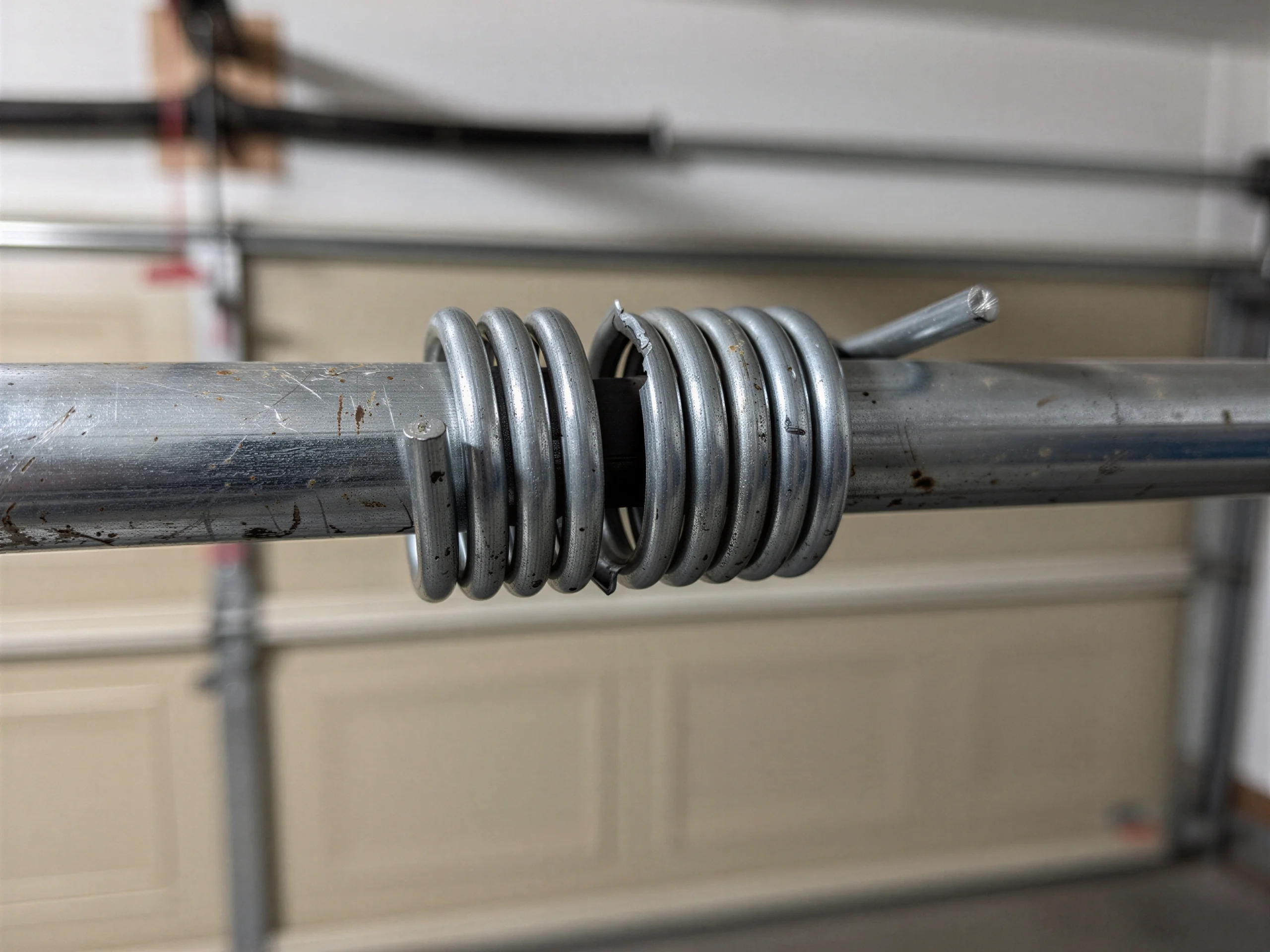
The first thing we do on site is figure out whether the door is safe to touch at all - a broken torsion spring under load can still move a door hard enough to hurt someone, so that gets dealt with before anything else.
Diagnosing the failure
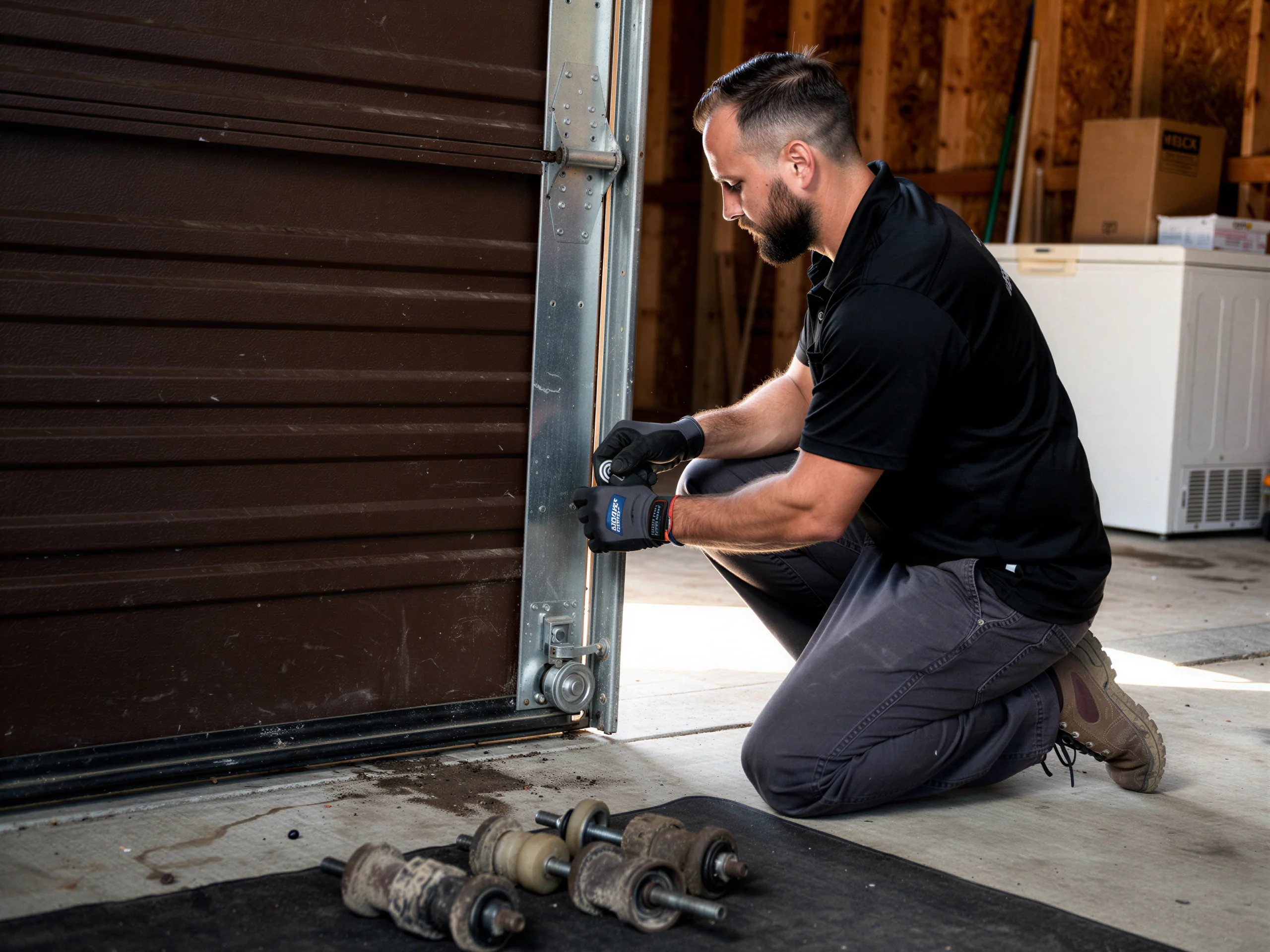
From there it's diagnosis: cable off the drum, roller out of the track, a cracked panel binding the whole assembly, or an opener board that's fried. Houses in this area run from 1938 construction up through builds as recent as 2015, with the median landing around 1986. That spread matters because a 1986-era door has different hardware than a 2010 door, and the fix isn't the same part number twice.
Checking the whole system
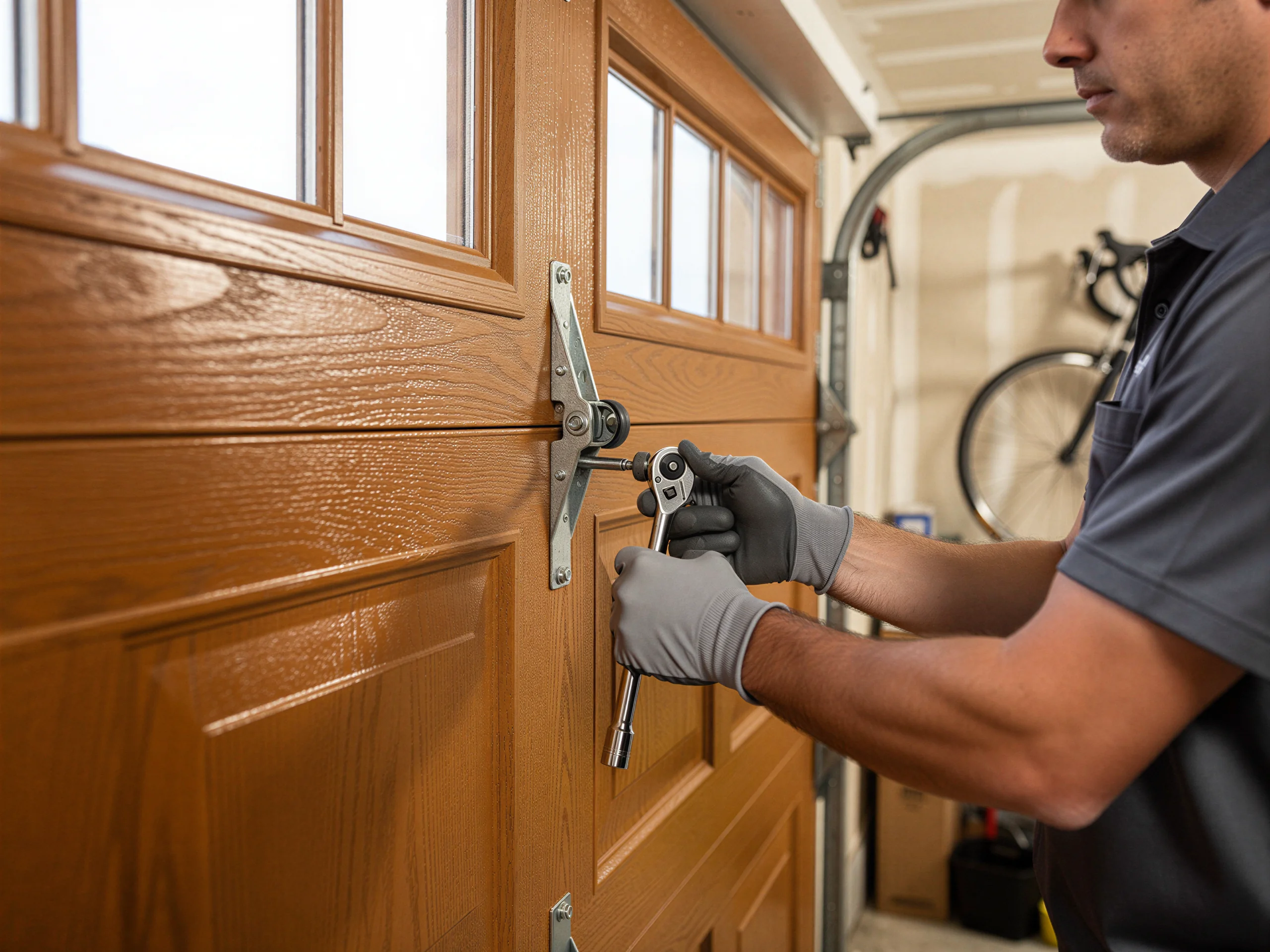
We get the door moving and the opener working again, then check the rest of the system - track alignment, cable tension, the second spring if it's a double door - so you're not back to an emergency call in three weeks. If the fix needs a part we don't stock, we say so and give you a real timeline instead of jury-rigging something that'll fail again.
What Is on the Truck
The truck carries torsion springs in the common sizes we see across this service area's housing stock, plus extension springs for the older setups still running them.
Common parts on hand
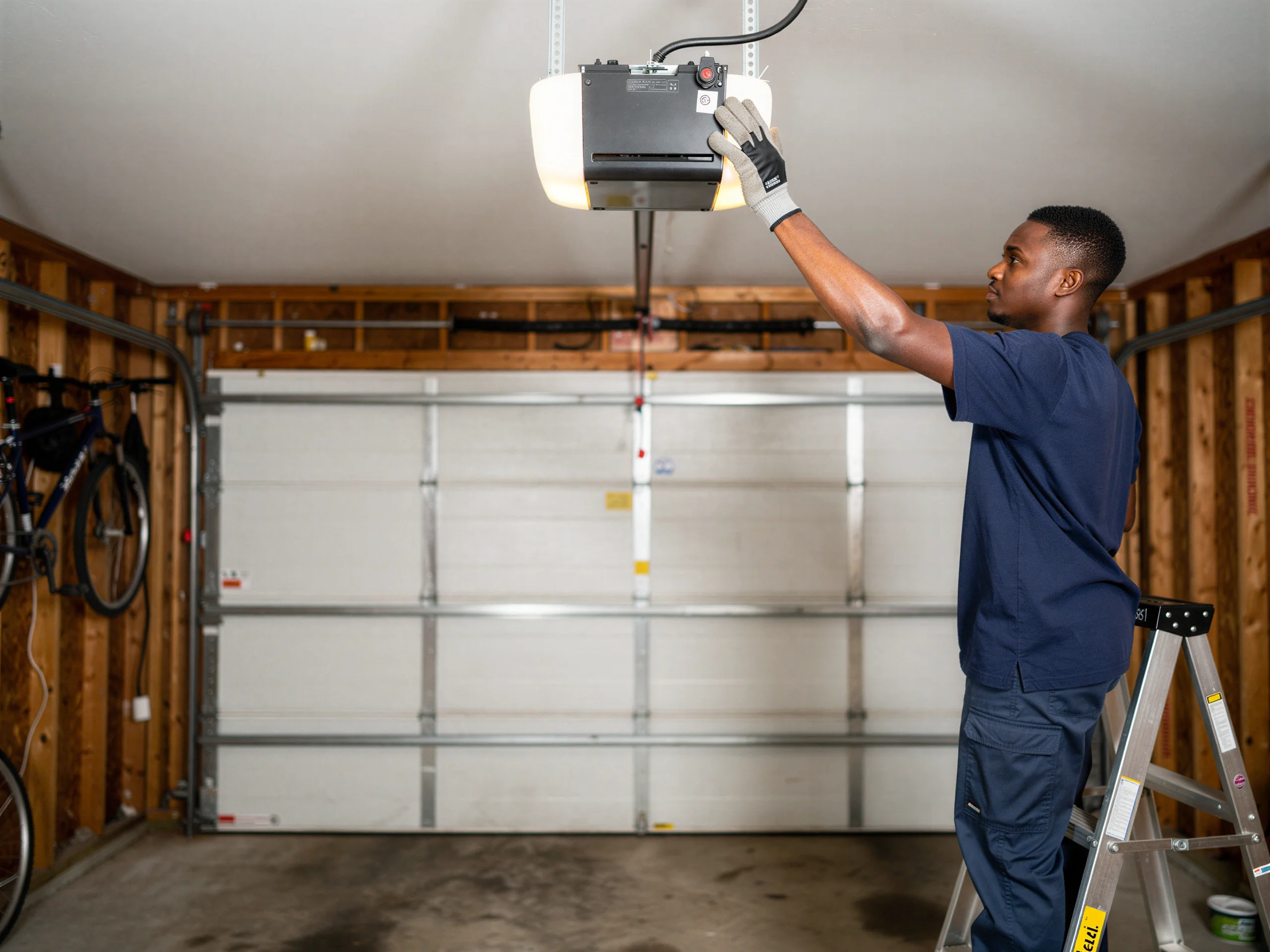
Cables, rollers (steel and nylon), hinges, and standard track sections cover most calls without a parts run. We also carry opener logic boards and drive gears for the major residential brands, since a dead opener is one of the most common night calls we get.
Special orders flagged
What we don't carry is everything - a custom panel on an architectural door or an obsolete opener model from the 1980s sometimes has to be ordered, and we'll tell you that up front rather than make you wait on site while we pretend otherwise.
Stock matched to housing
Given that local housing spans 1938 to 2015 with most of it built in the 1980s and 90s across the thirteen named communities in this area, the truck is stocked for that range first - older torsion hardware and the opener generations that came with it, since that's what we're pulling up to most nights.
What You Are Seeing
The door won't open, or it opens two inches and stops. The opener light blinks but the motor doesn't engage. A loud bang from the garage followed by the door refusing to budge - that's almost always a spring. A door that's crooked in the frame, higher on one side, means a cable has come off the drum or snapped.
Sometimes it's quieter: the opener runs but the door doesn't move at all, which usually points to a stripped gear inside the unit rather than anything wrong with the door itself. If the door reverses right after touching the floor, that's a sensor or limit setting, not a structural problem, and it's a cheaper fix than people assume.
Whichever of these you're looking at, don't force the door by hand once a spring has gone - that's how fingers and lower backs get hurt. Call it in and we'll tell you over the phone whether it's safe to leave alone until we arrive or whether it needs attention right away.
Why This Fails Locally
This area sits in a cold, severe climate zone, and that's the detail most homeowners don't connect to a dead spring at 6 a.m. Steel springs lose temper faster with repeated cold-to-warm cycling than they do in a mild climate, and a lot of the housing stock here - built mostly in the 1980s and 90s, with the overall range running 1938 to 2015 - is old enough that the original springs are well past their rated cycle count.
Across the roughly 36,000 households and nearly 22,000 owner-occupied houses in this service area, that means a large share of garages are sitting on hardware installed before anyone reading this bought the house. Cold makes the lubricant stiffen, the steel more brittle, and the failure sudden instead of gradual - which is exactly why these calls cluster on the first hard cold mornings of the year rather than spreading evenly through the seasons.
It's not a defect in any one door. It's thirty-plus years of steel meeting a climate that's harder on it than most people expect, in a region where that door often sits on an otherwise well-kept house that nobody thought to check.
Talk to a local pro
Garage door service in Leesburg?
Same-day service with honest, upfront quotes.