What the Fix Involves
A new install isn't just swapping a door for a newer version of the same thing. Most houses in this area went up between 1938 and 2015, with the bulk of the stock dating to the 1980s and 90s across the thirteen named communities we cover.
Openings changed over decades
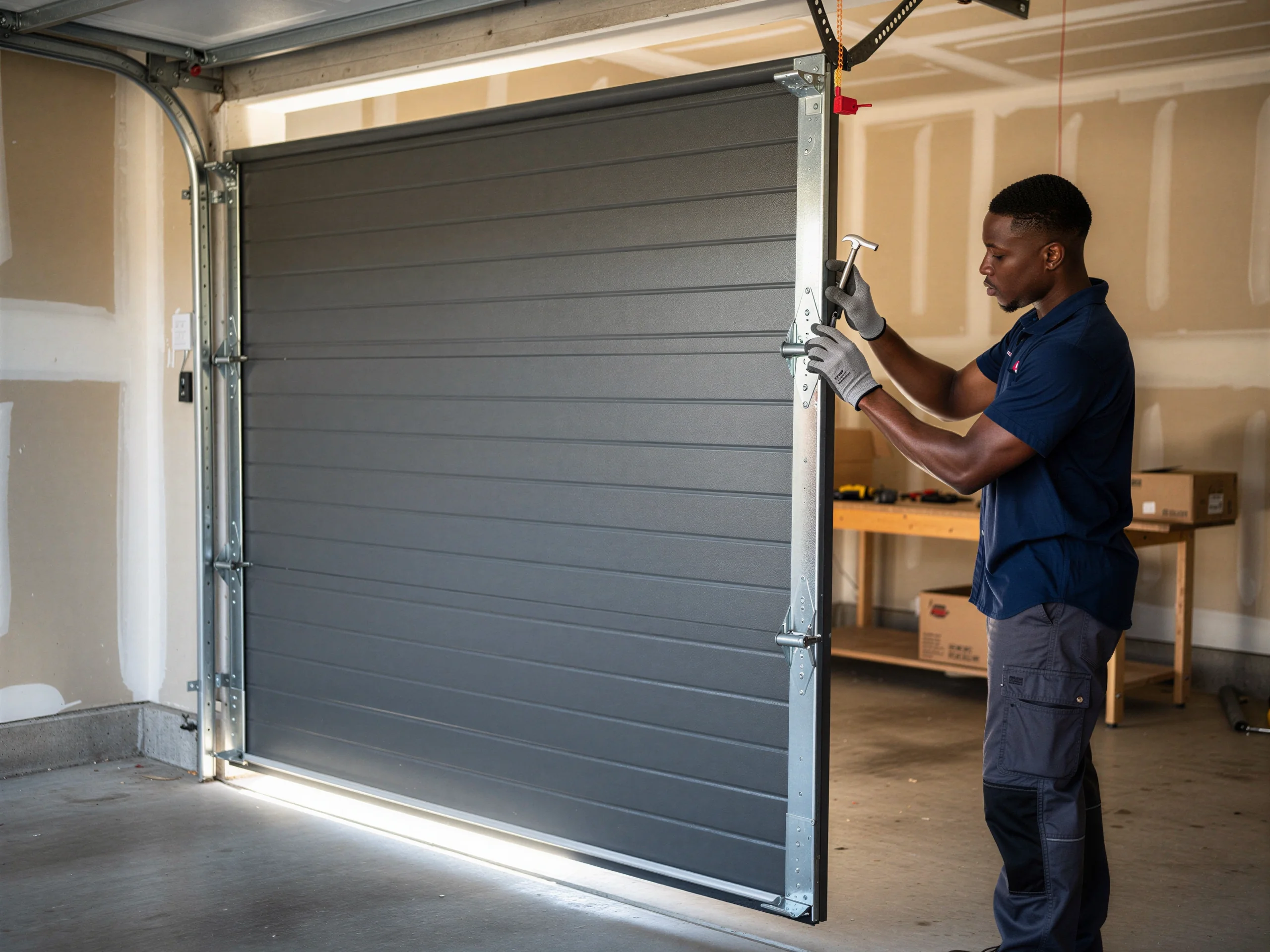
That matters because opening sizes, header clearance, and track configurations changed a few times over that span, and a door ordered to a generic size sheet often doesn't sit right in an opening framed in 1986 versus one framed in 2010. The job starts with measuring the actual opening, not trusting the old door's dimensions, since the old unit may have already been a mismatch installed by someone in a hurry.
Checking the opening
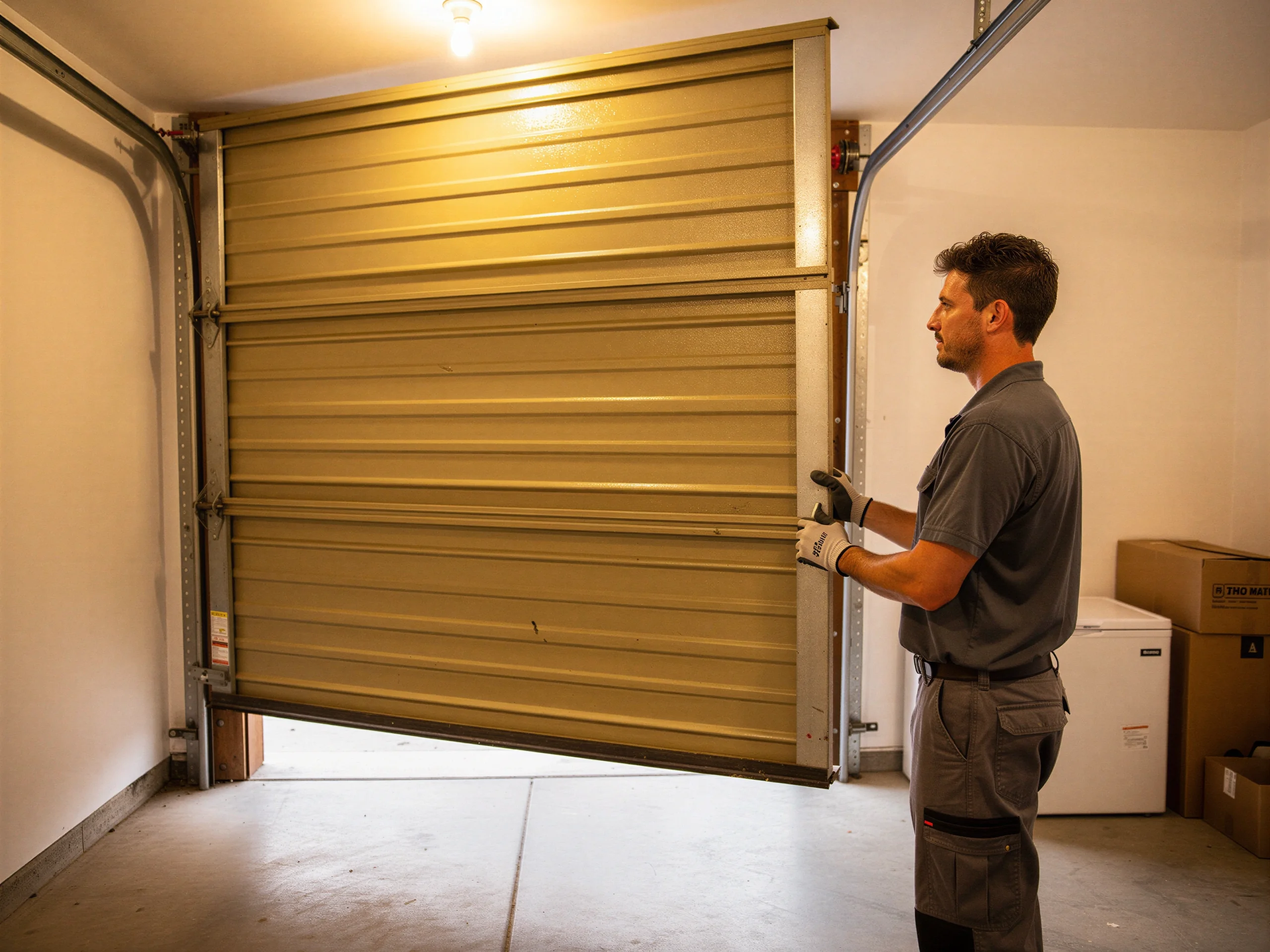
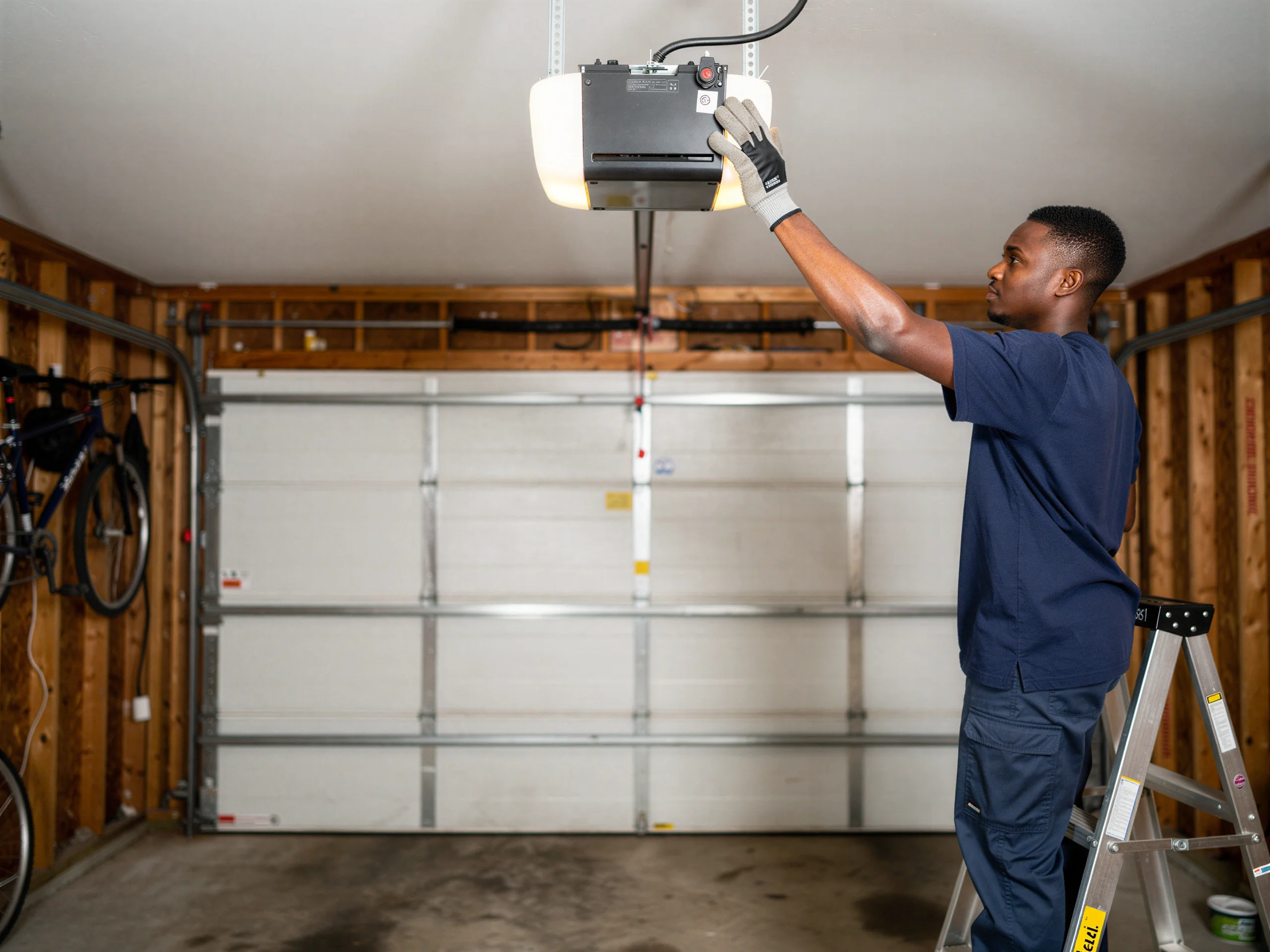
We check header height, side room for the track, and whether the existing jamb is square - a lot of these openings have settled a bit over three or four decades. Then we size the torsion spring to the door's actual weight and the drum to the drop, set the track plumb, and balance the door before the opener ever gets bolted on.
Framing needs carpentry first
One limitation worth saying up front: if the framing is out of square by more than a small amount, that's carpentry, not garage door work, and we'll tell you to get a contractor in first rather than force a door into an opening that isn't ready for it.
What Is on the Truck
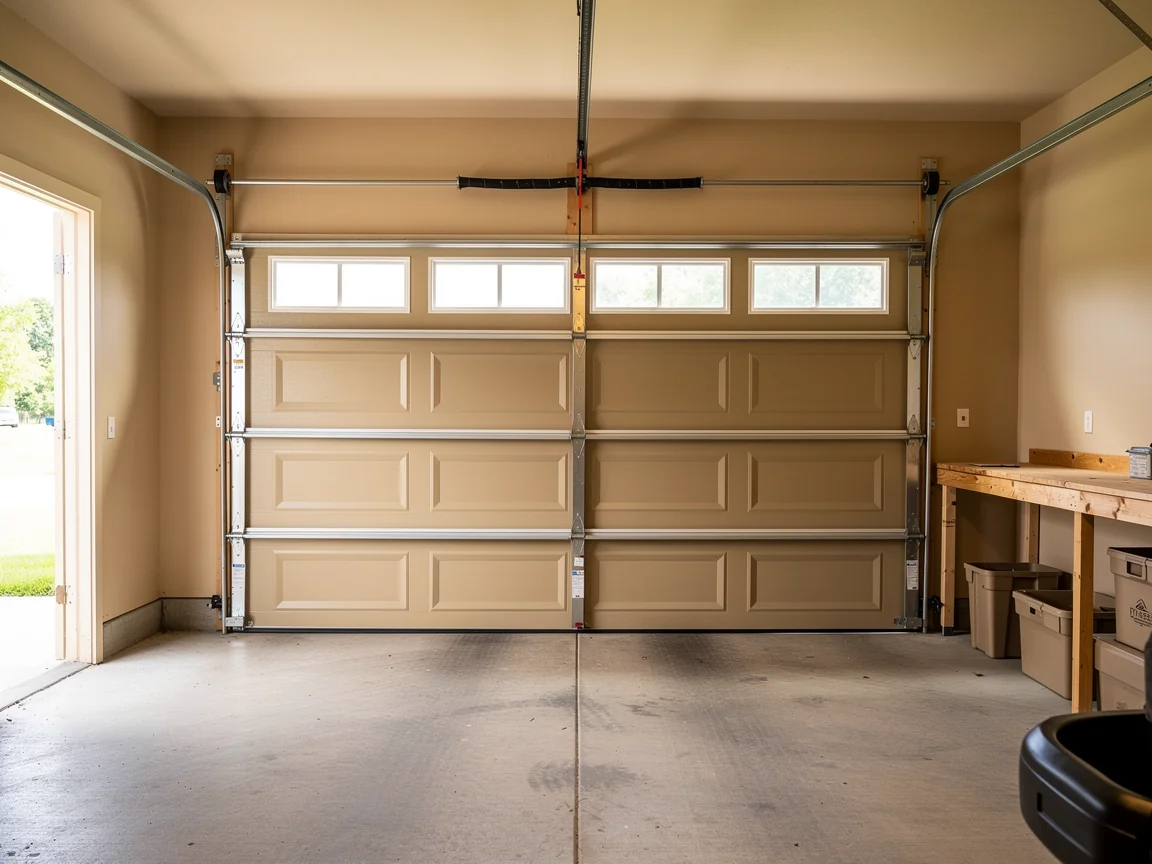
For installs in this area we carry insulated steel sections rated for the cold-weather band we sit in, since an uninsulated panel on an attached garage here means a cold wall against living space for several months a year.
Spring weight range
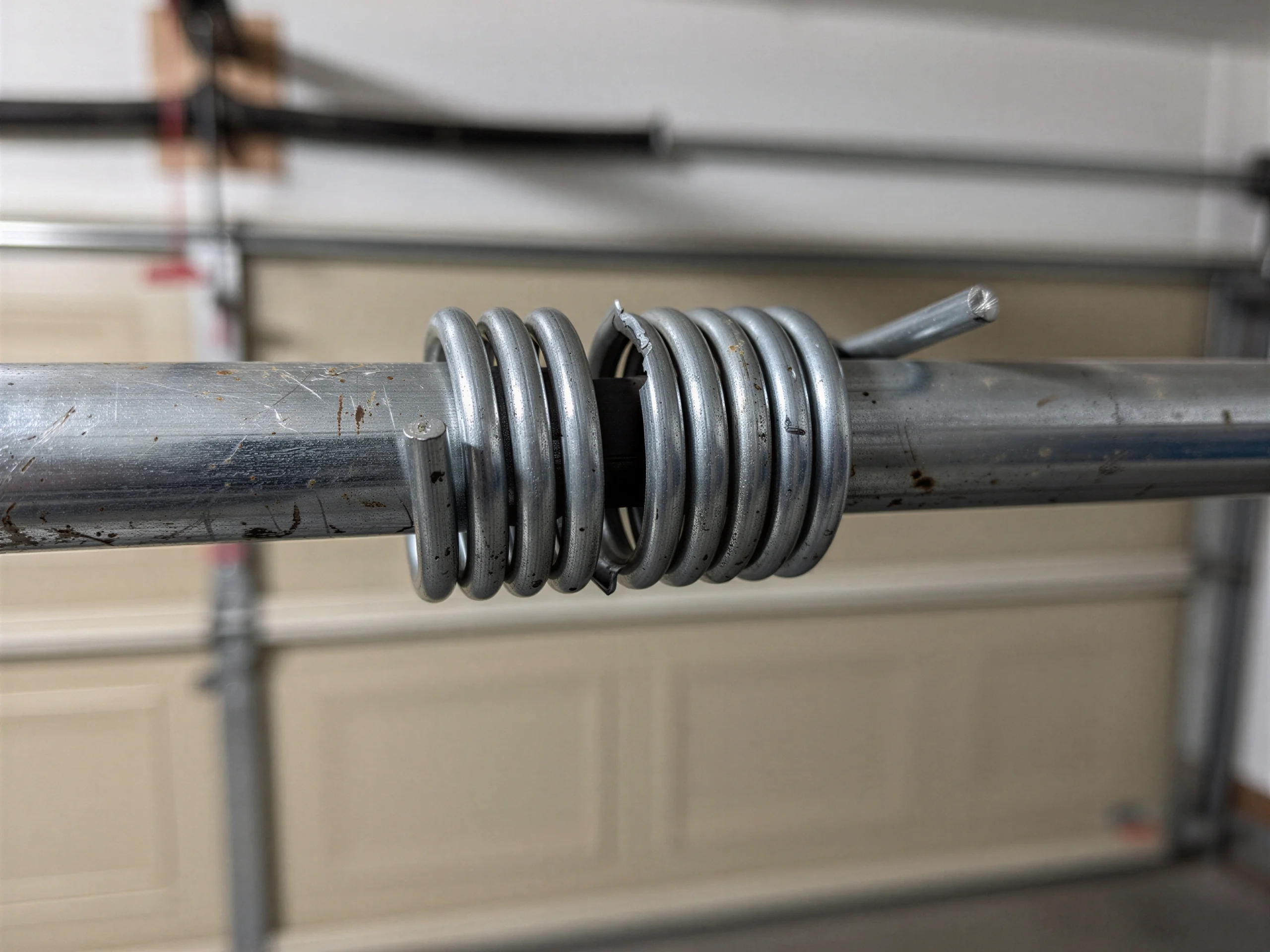
We stock torsion springs across a working range of weights rather than one size, because a door built for a house from the 1986 median era often weighs differently than a door matched to a newer build in the same subdivision.
Track and drum options
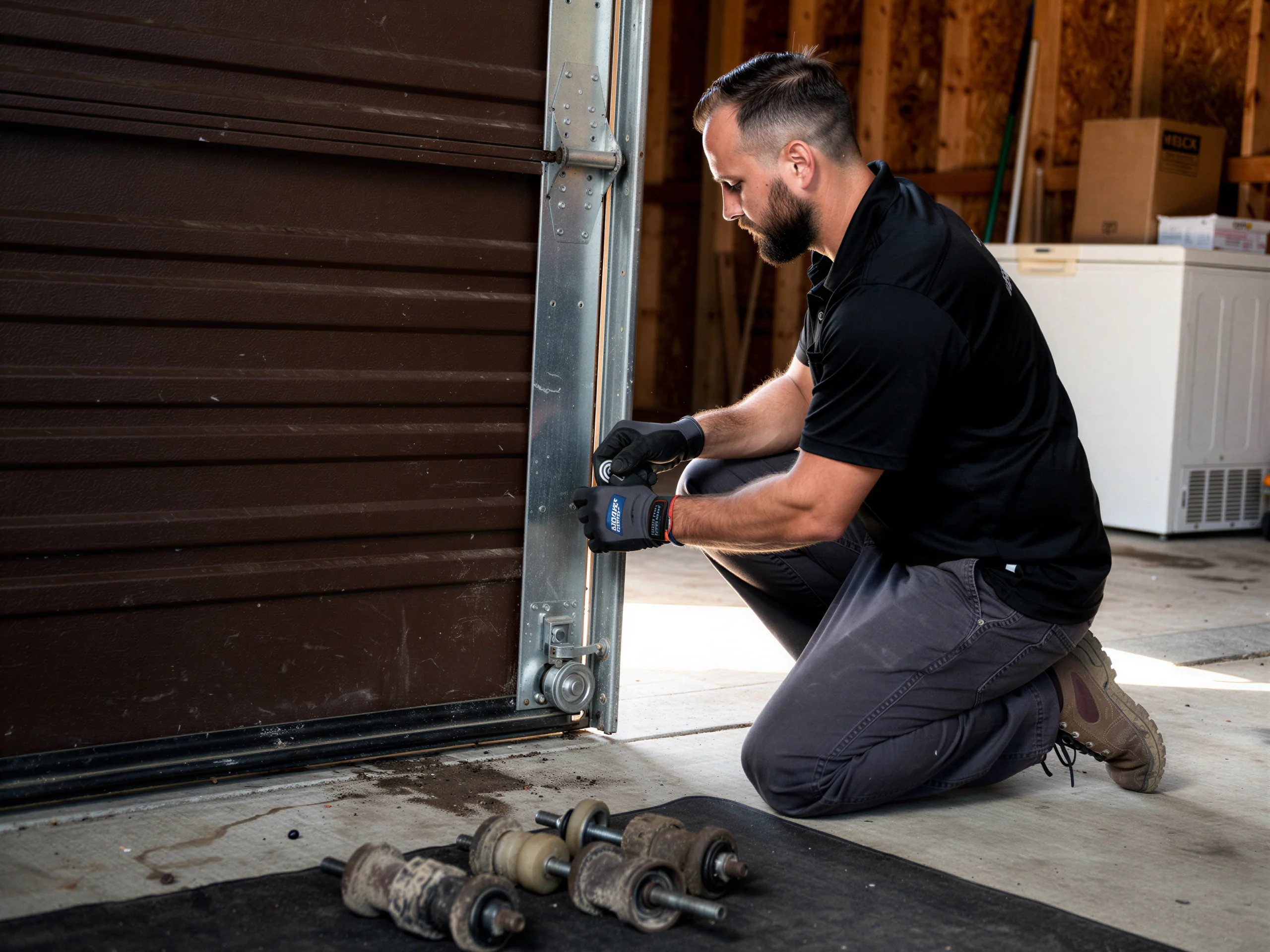
We also carry galvanized track in standard lengths, nylon and steel rollers, and both standard-lift and high-lift drum options, since header height varies enough across this housing span that one drum setup doesn't fit every opening. Weatherstripping and bottom seals rated for sustained cold are standard on every install, not an upsell.
Custom sizes special-ordered
What we don't carry on the truck is custom millwork doors or anything built to a non-standard opening - those get special-ordered, and that adds lead time we can't shorten. If your opening is an odd size, we'll tell you that at the estimate, not after the truck shows up.
What You Are Seeing
If you're searching for installation rather than repair, you've usually already ruled out a quick fix. The common signs: a door that's been patched more than once, a panel that's dented or rusted through at the bottom where road salt and melt runoff sit against the steel, or an opener straining because it's lifting a door that's heavier than the spring was ever sized for.
Uninsulated single-layer steel
In homes from the earlier end of the 1938-2015 range, we also see single-layer steel doors with no insulation value at all, installed back when nobody factored in energy loss through the garage.
Patching stops making sense
Replacing that door, rather than patching it again, is usually the point where the math stops favoring repair - a cracked panel on a 30-plus year old door is rarely a one-panel job once you start looking at what else on that door is original.
Unbalanced swapped doors
Another pattern: openers bolted to doors that were swapped out at some point without re-balancing. The door looks fine, but it's fighting the spring every cycle, which shortens the life of both.
Why This Fails Locally
This area sits in a cold climate band with real winter severity, and that changes what a garage door has to survive here versus a milder region. A steel door and track system goes through real expansion and contraction across the season, and on original hardware from a house built in the 1986 median window, that cycling has had three to four decades to loosen fasteners, dry out lubrication, and fatigue a spring that was never oversized to begin with.
Across the thirteen communities we work in, from areas near Waterford and Purcellville to the Brambleton and South Riding side of our coverage, the housing stock spans 1938 to 2015, which means we're rarely installing into a blank slate - we're matching new equipment to openings and framing that reflect whatever building practice was standard the year that house went up. A door rated for a mild climate, installed here because it was the cheapest option at the time, is a door that's going to fail early in a cold-severe winter.
That's the local failure mode: not bad luck, but equipment mismatched to both the age of the opening and the climate it has to survive every winter.
Talk to a local pro
Garage door service in Leesburg?
Same-day service with honest, upfront quotes.