Why This Fails Locally
South Riding's median household income runs $190,701, well above the $176,841 median across the rest of the Leesburg service area. That number matters here because it sets where the repair-or-replace line actually falls: at this income level, most owners can afford a full door swap, but a worn roller set almost never justifies one. The door panels, track, and opener are usually fine. It's the rollers that give out first.
The houses themselves are a different story than most of what we see elsewhere in the service area. South Riding's median year built sits around 2006, a good two decades newer than the 1986 median across the wider territory. These are builder-grade doors going up during one tight construction window, which means a lot of them shipped with the same cheap 7-ball nylon rollers, now 15-20 years into daily cycles. Nylon doesn't fail dramatically. It wears down a few millimeters at a time until the door starts riding rough in the track, and owners usually notice the noise before they notice why.
Where This Job Goes Sideways
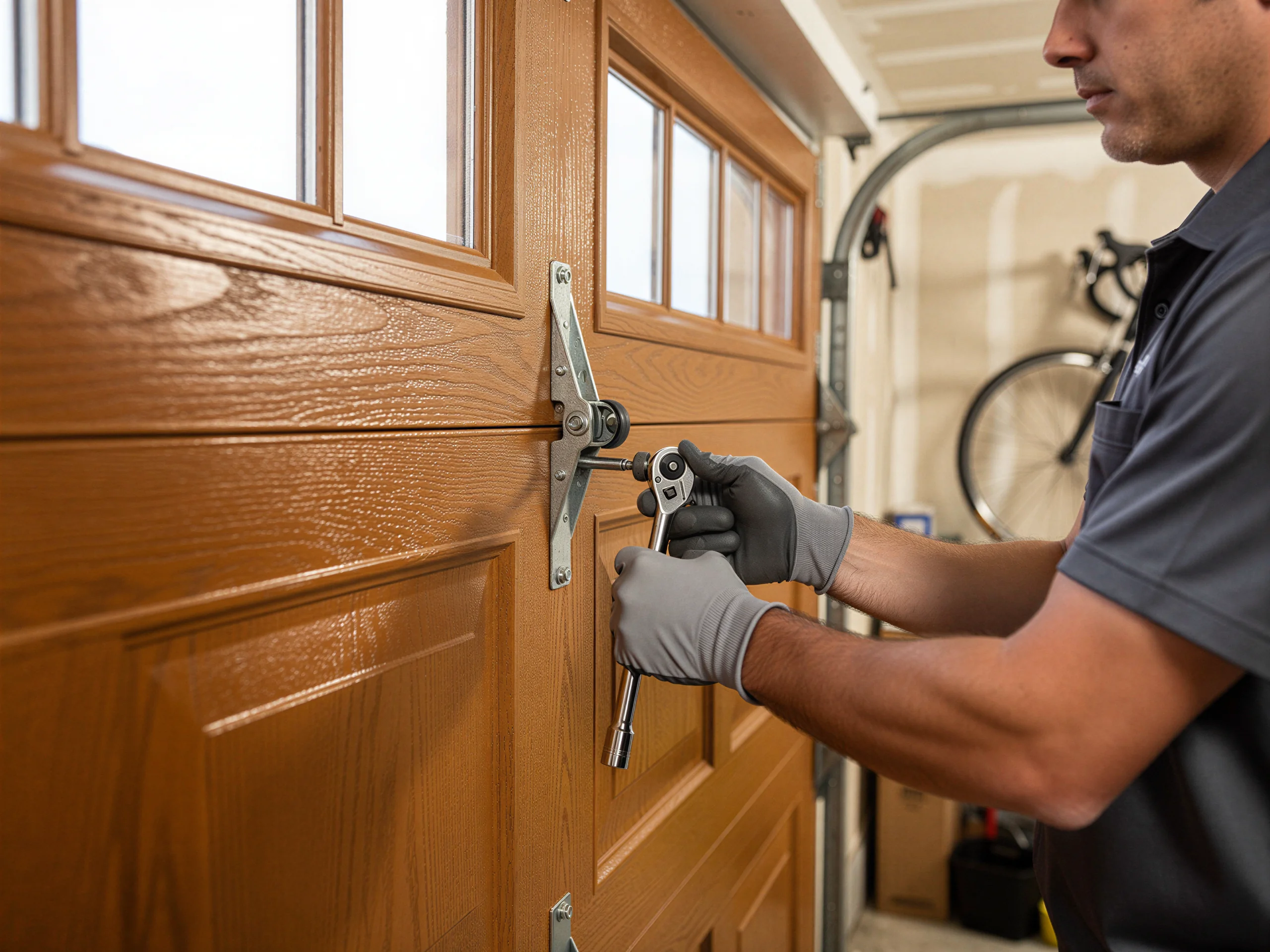
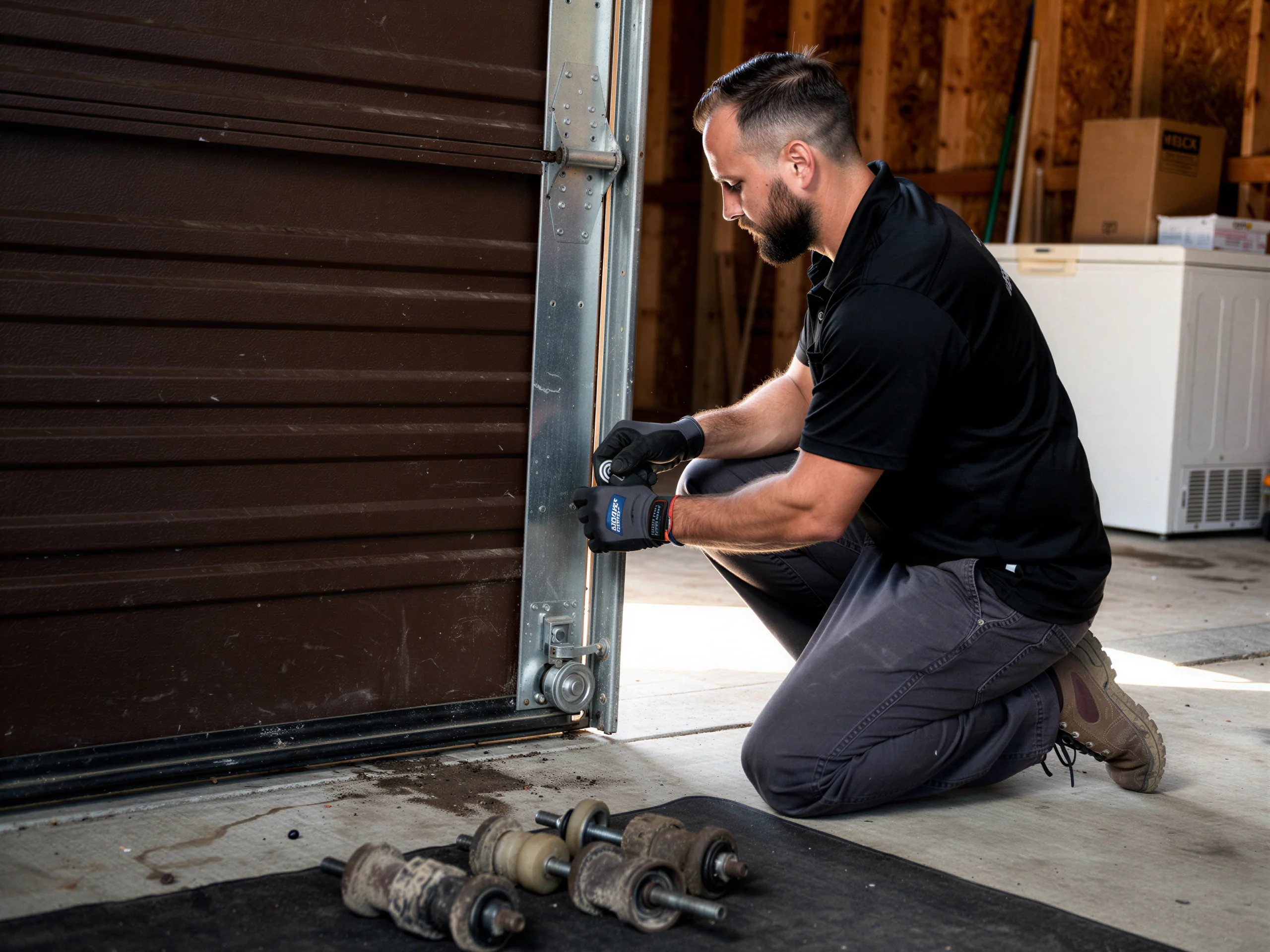
The mistake we see most in a neighborhood like this is jumping straight to "replace the door" because the household budget allows it. A grinding or vibrating door is almost always a roller problem, not a structural one, and swapping stock nylon rollers for sealed-bearing steel ones solves it for a fraction of a full replacement.
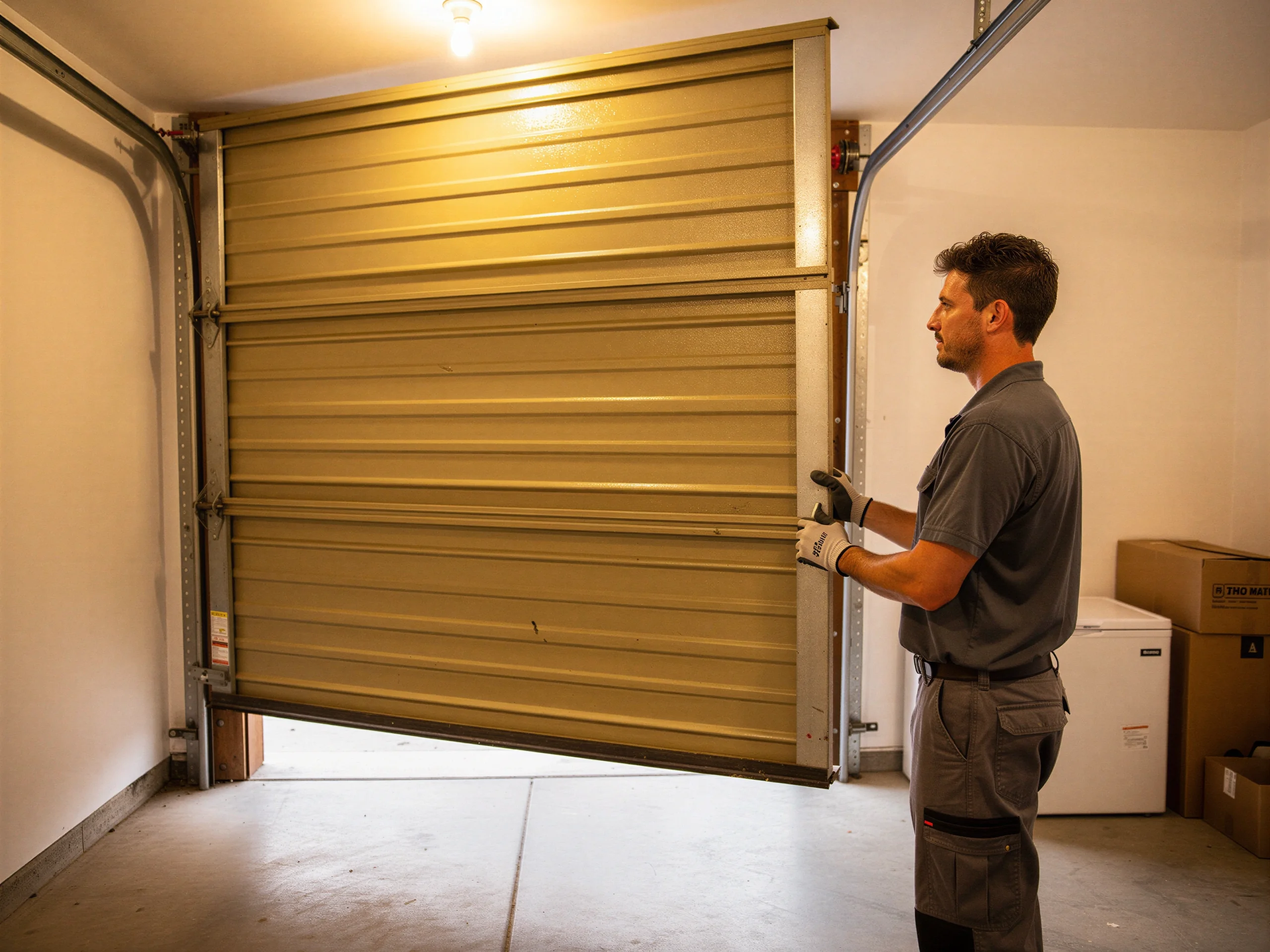
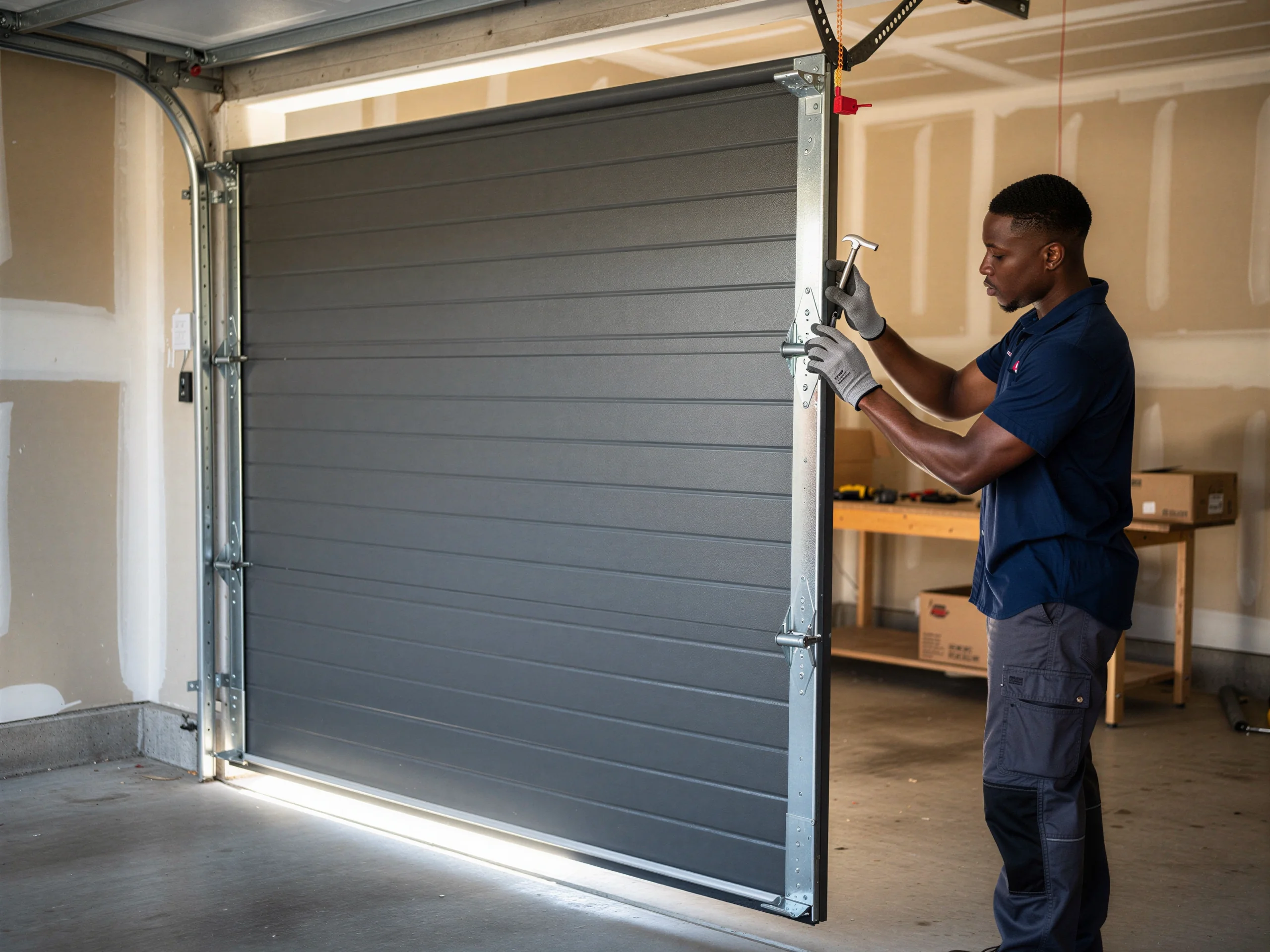
The honest limitation: if the track itself has gone out of plumb from years of a worn roller riding crooked, rollers alone won't fix it. That's a track adjustment on top of the roller swap, and we won't know which one you need until someone's looking at the door in person. We also won't tell you nylon rollers are junk across the board - they're quieter than steel and fine for a lot of households. The problem here is specifically that builder-grade doors in this price bracket were built to a cost, not a lifespan, and the climate doesn't help. This area sits in a cold-severe band, and cold stiffens nylon and thickens old lubricant, which accelerates exactly the wear pattern these doors are already prone to.
Getting It Booked In
We run out of Leesburg, about 14 miles from South Riding, so there's no local counter or drop-off point here - a truck comes to you.
No same-hour promise
That distance doesn't change the work itself, but it does mean we're not the outfit to call if you need someone standing in your driveway in twenty minutes; we're not making that promise for this area and we won't pretend otherwise.
Roller calls common here
What we can tell you: across the roughly 10,429 households in South Riding, compared with 36,086 across the full service area, roller replacement is one of the more common calls we get from this side of the territory specifically because of the build-year cluster.
Roller stock for first trip
If you're booking, knowing the rough age of your door and whether it's making noise, binding, or visibly off-track helps us bring the right roller stock the first trip instead of a second visit.
What You Are Seeing
A roller going bad on a builder-grade door usually announces itself as a rattling or grinding sound that gets louder as the door moves, especially near the top of the track where the curve puts more side load on the roller stem.
Jumping at one spot
You might also see the door hesitate or jump slightly at that same spot, or notice the whole door shaking more than it used to when it opens.
Clunk from one bad roller
If one roller has split or a stem has sheared, you'll sometimes hear a distinct clunk on every cycle instead of a steady grind - that's usually one bad roller rather than the whole set, though on a door this age we'd still check all of them while we're there.
White plastic dust sign
Flaking white plastic dust near the track is another sign specific to nylon rollers breaking down, and it tends to show up before the noise does if you're looking for it.
Talk to a local pro
Garage door service in Leesburg?
Same-day service with honest, upfront quotes.