Can You Do This Yourself
A lot of Wolf Trap houses were built right around 1981, and the roller sets on those original doors have usually never been swapped out.
Steel-on-steel track wear
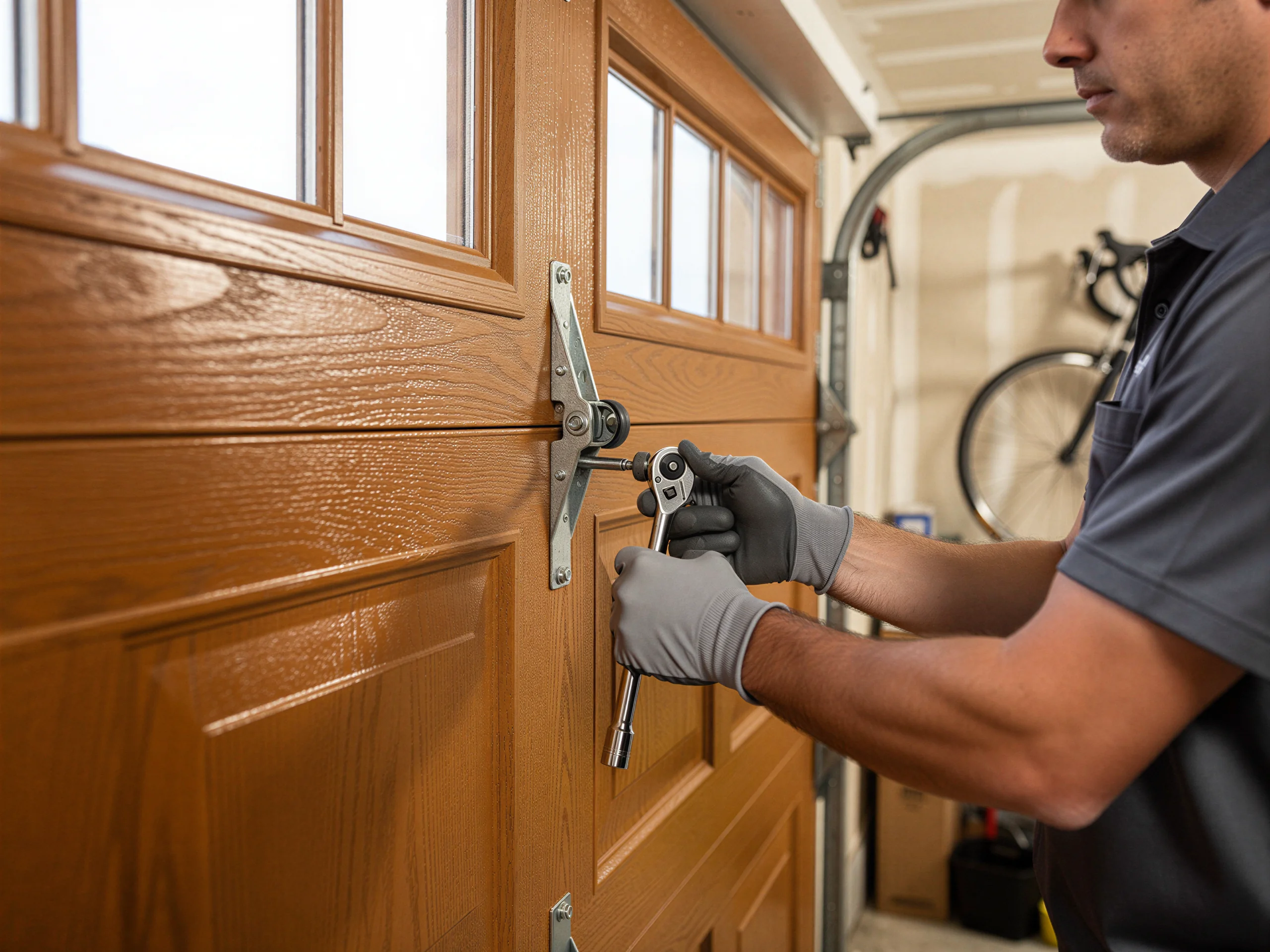
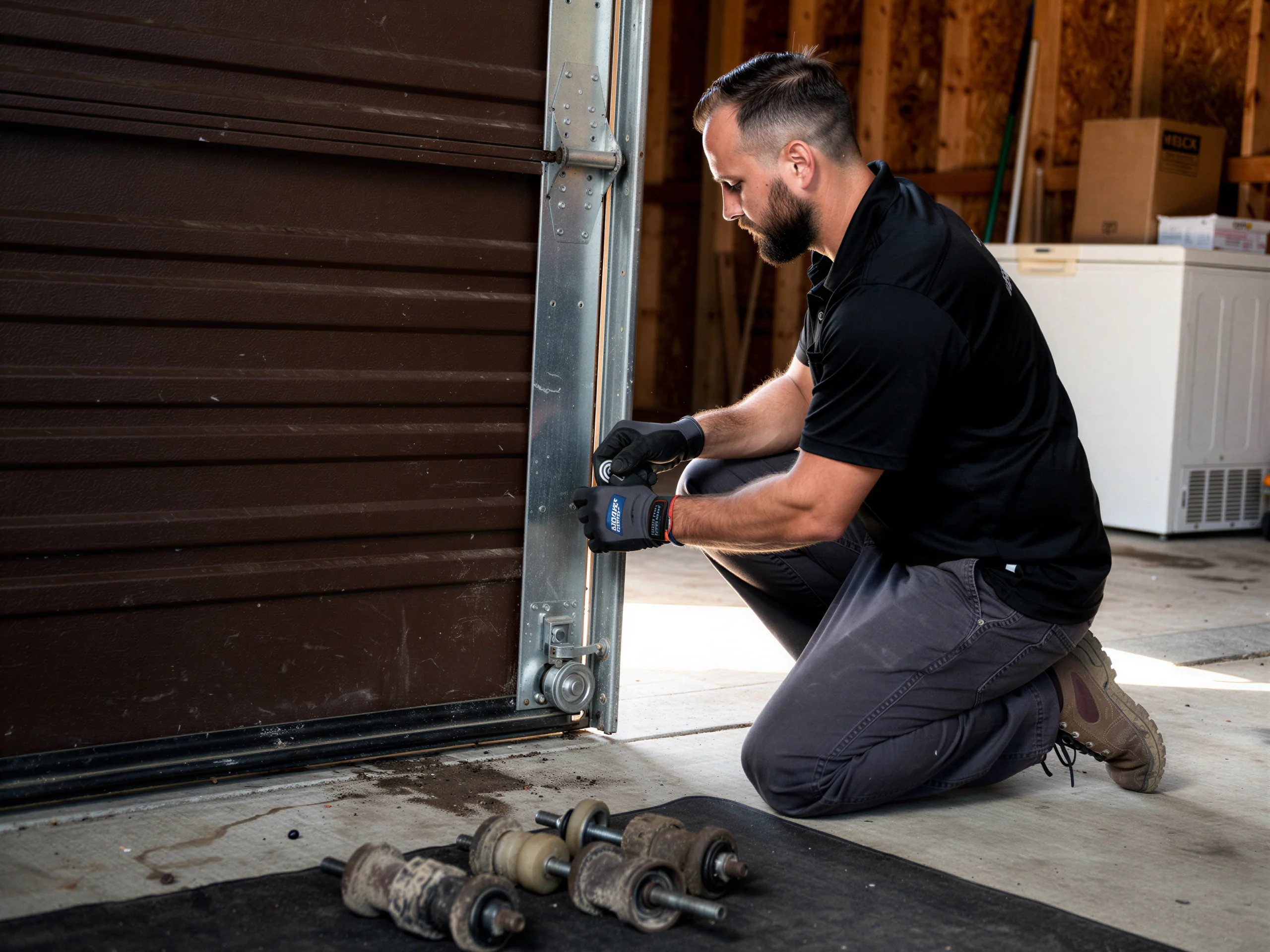
That's over four decades of steel rollers riding in galvanized track, and steel-on-steel wears the track lip faster than nylon ever would. Swapping a roller isn't hard in theory - pull the retaining bracket, slide the stalk out, drop a new one in.
Reusing worn track
The part where people get hurt is the bottom section, where the cable and bracket are under spring tension, and the part where they get it wrong is reusing worn track instead of checking it against the new roller's stalk length.
Top rollers, secured door
If it's just the top two rollers on a door that still opens smooth, you can likely do it with the door secured and the opener unplugged. If the door binds, scrapes, or the track is visibly bowed, that's a job for someone who's replaced hardware under tension before. We're honest that this is one of the lower-risk repairs on a garage door - but low-risk isn't no-risk.
What It Costs
We don't have a flat number to quote you without seeing the door, but a few things move the price. Original 1981 track and jamb brackets are often a slightly different gauge than what's stocked today, so a straightforward roller swap sometimes turns into a partial track replacement once we're actually looking at the rail. Nylon rollers with sealed bearings cost more than steel but outlast them by years and run quieter - worth it on a door this old where you're not planning to replace the whole unit soon. We'll tell you on site whether you need all ten rollers or just the two or four taking the worst of the load.
Getting It Booked In
We run out of Leesburg, about 19 miles from Wolf Trap, so a roller job here gets scheduled as a routed call rather than a same-day walk-in.
Urgency levels for stuck doors
Tell us when you call whether the door is still moving - stuck-closed and stuck-open are different urgency levels for us even though the roller problem might be identical. If you've got a second vehicle in the garage, let us know so we can plan around getting the door open before we start.
Build year stocks the truck
We'll ask the build year of the house if you know it; houses from the 1981 wave tend to need the same handful of parts, so it helps us roll the right stock onto the truck before we leave Leesburg.
What You Are Seeing
Grinding or a rhythmic thump as the door travels usually means a flat spot has worn into one or more steel rollers - common on hardware that's sat in the track since 1981 and never been touched. If the door jumps or chatters sideways instead of a clean up-and-down, check whether one roller has actually popped out of the track; that's often from a bent stalk rather than the roller itself failing. Winters here put real stress on old steel rollers - the service area sits in a cold climate zone with freeze-thaw cycling, and metal rollers stiffen and bind in the cold faster than nylon. A door that worked fine in October and started grinding in January is a roller story more often than a spring story.
What the Fix Involves
We pull each roller, check the stalk against the bracket, and inspect the track section it was riding in - on a door this age, pitting or a widened track lip is common enough that we check it as a matter of course, not an upsell. Nylon rollers go in as the replacement standard; they run quieter and don't develop the flat spots steel does. If the track itself has worn beyond what a roller swap can fix, we'll show you the section in question before doing anything further - we don't replace track that's still within spec just because it's old. One thing we won't do is promise a universal fit sight unseen; 1981-era hardware varies enough between houses that we confirm stalk length and bracket spacing on site before cutting a new roller loose from the truck stock.
Talk to a local pro
Garage door service in Leesburg?
Same-day service with honest, upfront quotes.