Can You Do This Yourself
Wolf Trap has about 5,382 households, a small slice of the roughly 21,877 owner-occupied houses across the wider service area. That size matters: this isn't a neighborhood where a crew swings by every week, so most of what gets installed here is scheduled one job at a time, not run off a standing route.
Spring assembly not weekend job
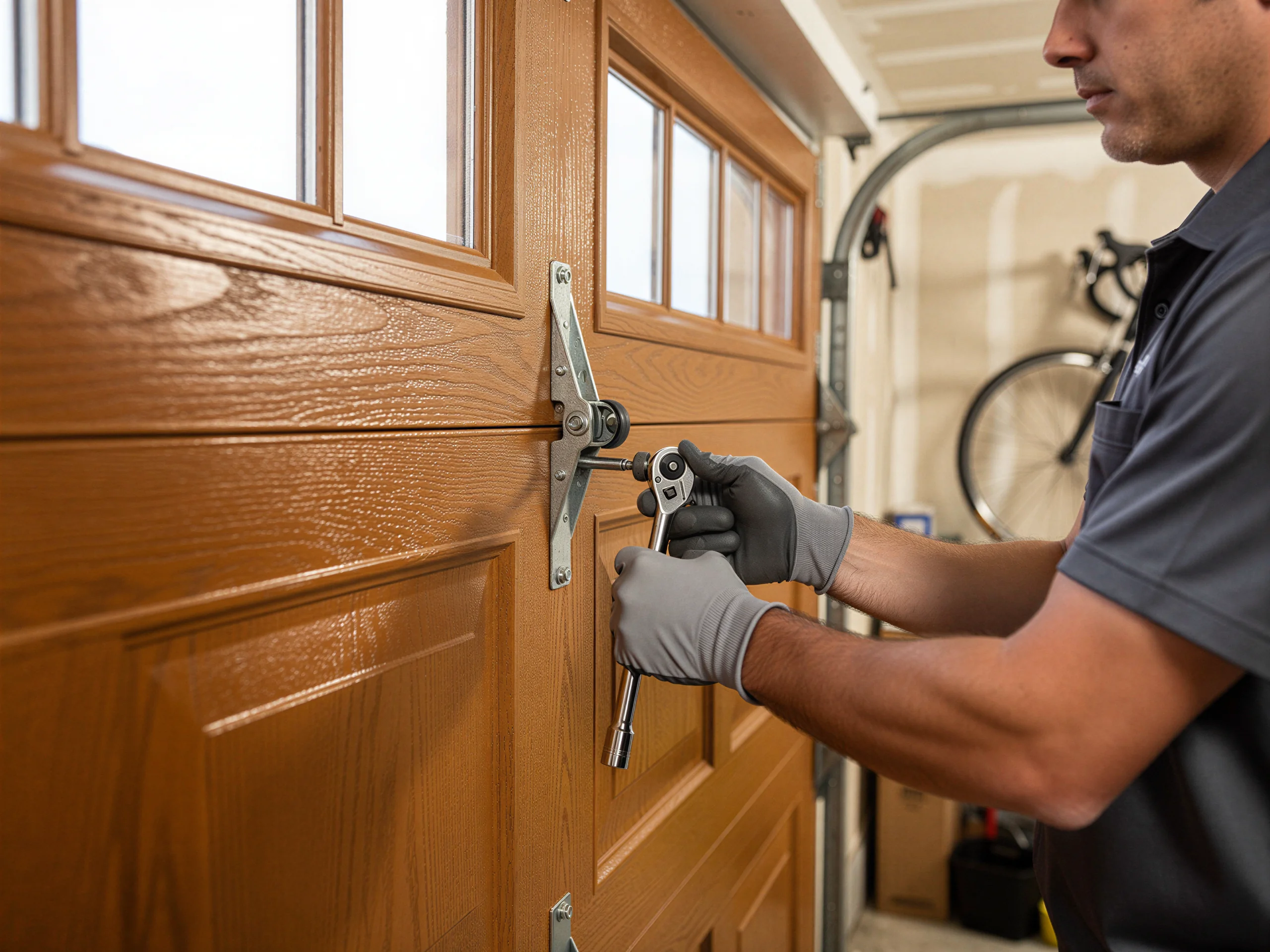
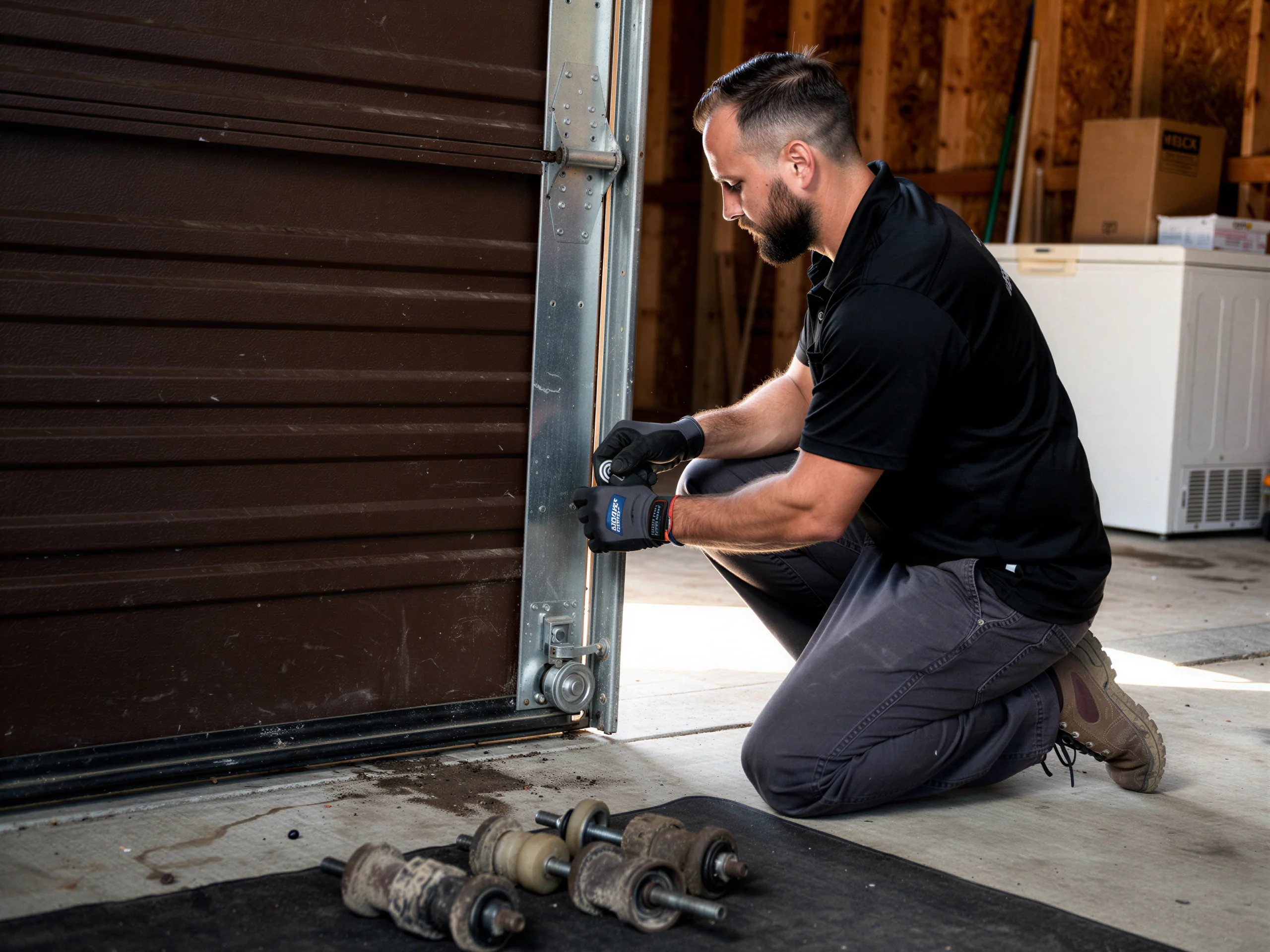
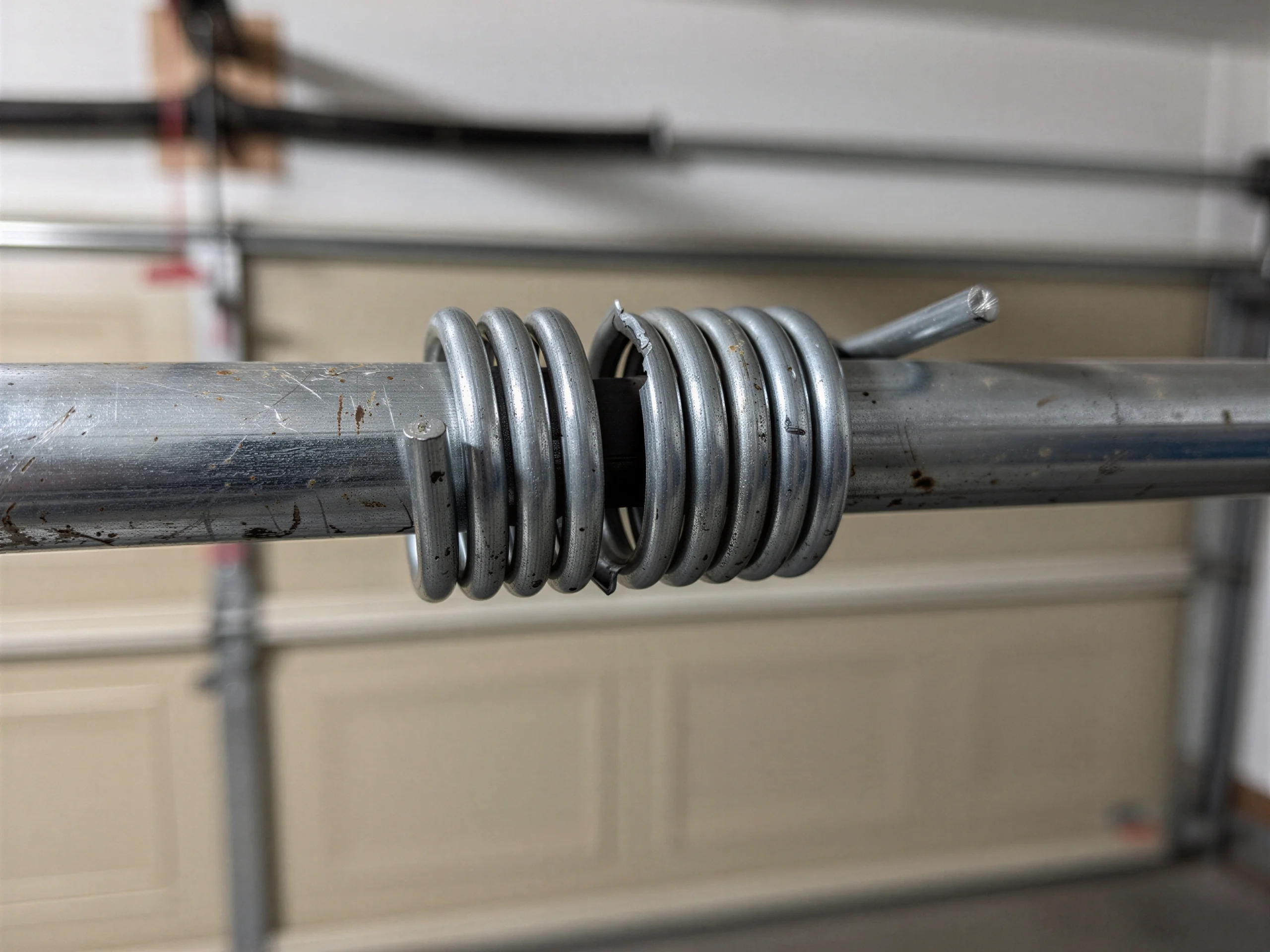
Swapping a torsion spring assembly or pulling a full door out of a 1981-built opening isn't a weekend job for most owners. The springs on a double door hold enough tension to break a finger or a window if the winding bar slips, and getting the track plumb on an older jamb takes more than a level and patience.
Measure the settled opening
If your door is original to a house built in the early 1980s, the opening itself may have settled slightly over four decades, which means a new door has to be measured on site, not ordered to a catalog size.
Roller and sensor DIY only
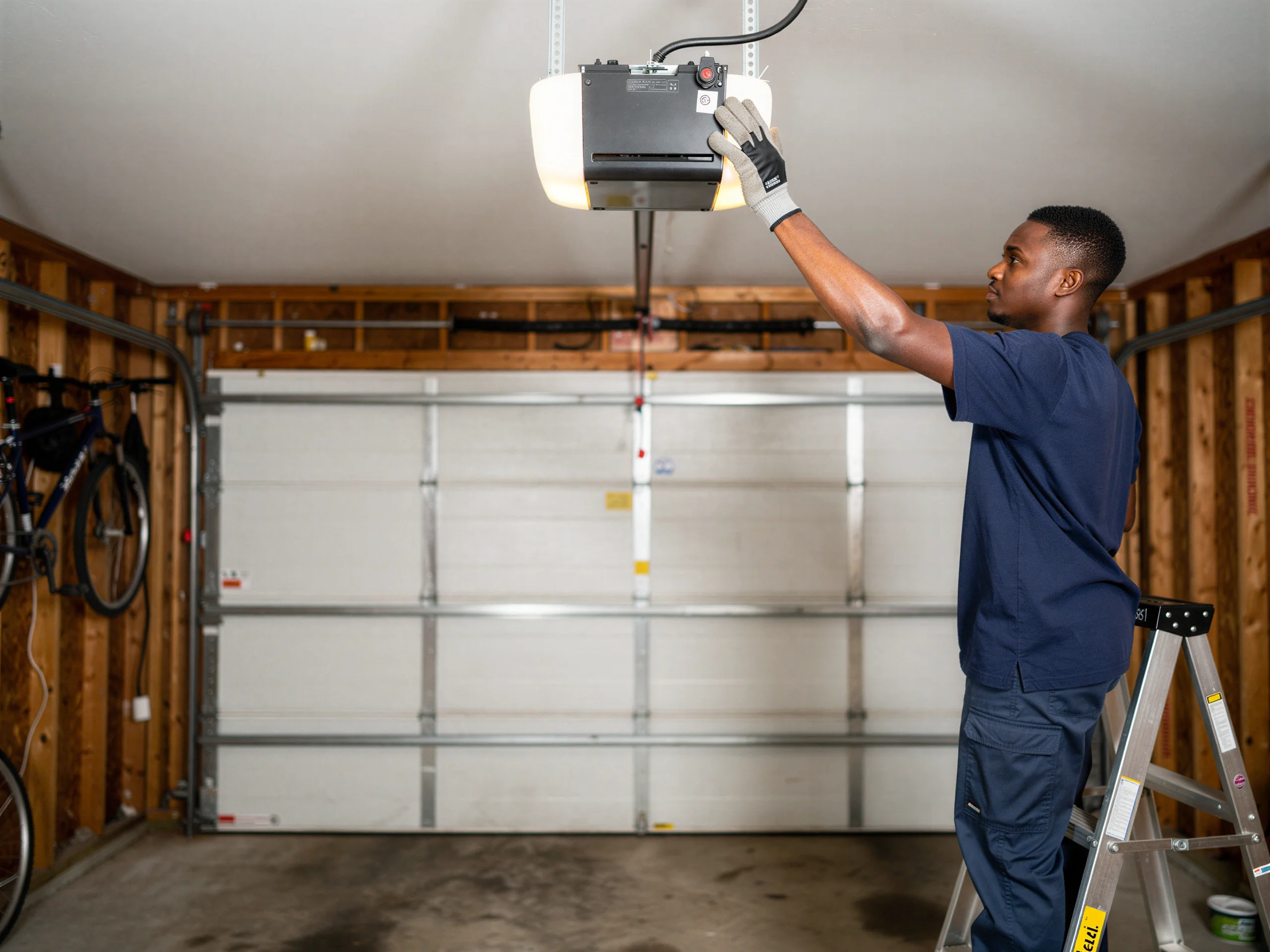
DIY is reasonable for a broken roller or a misaligned sensor eye. Swapping the whole door, the torsion hardware, and the opener wiring together is not - one mistake there usually means a second call to fix the first one.
What It Costs
We don't have a flat number to hand you here, because material cost swings with door size, insulation rating, and whether the opener gets replaced at the same time.
Income shapes material choice
What we can say: Wolf Trap's median household income sits around $250,001, well above the $176,841 median across the rest of the service area, and that income gap tends to show up in material choice, not install labor.
Upgraded materials, same labor
Owners here more often spec insulated steel or wood-composite doors with upgraded weatherstripping instead of the base builder-grade panel, which raises the material line but not the time on site.
Heating cost of thin doors
The climate band here is classified cold and severe, so a door without a real insulation rating is going to cost you on the heating bill for as long as it's installed, even if it's cheaper on day one. Ask for a written quote broken into door, hardware, and labor before you sign - skip anyone who gives you one lump number over the phone.
Getting It Booked In
Wolf Trap sits about 19 miles out from Leesburg, which is the far edge of the territory this crew covers on a given day. That distance doesn't change the install itself, but it does mean the job gets scheduled rather than slotted in same-day - plan to book ahead rather than call expecting someone on site within the hour. Measurements for a new door are usually done on a separate visit from the install, especially if the opening is non-standard or the jamb has shifted with age. Once the door and hardware are confirmed, the install itself is typically a single day's work for a standard double or single door, opener swap included. If you're replacing a door that's failed completely and the garage is unusable, say so when you call - that gets bumped ahead of routine replacement jobs, though it still has to fit around the drive time out from Leesburg.
What You Are Seeing
Wolf Trap's housing stock centers on 1981, a touch earlier than the 1986 median across the broader service area. Doors original to that era are mostly steel, single-layer, non-insulated panels on extension spring hardware rather than torsion - a setup that's cheap to build but hard on the cables once the springs lose tension. In a cold climate rated severe, an uninsulated door this old is usually the reason a garage stays ten to fifteen degrees colder than it should and why frost forms on the inside of the panel on sharp mornings. If your opener is original too, it's likely a chain-drive unit with no battery backup, which means a winter power outage leaves the door stuck wherever it last stopped. None of that is unique to one house - it's a pattern tied to when this part of the area was built out, and it's the reason replacement requests here skew toward full door-and-opener swaps rather than single-part repairs.
What the Fix Involves
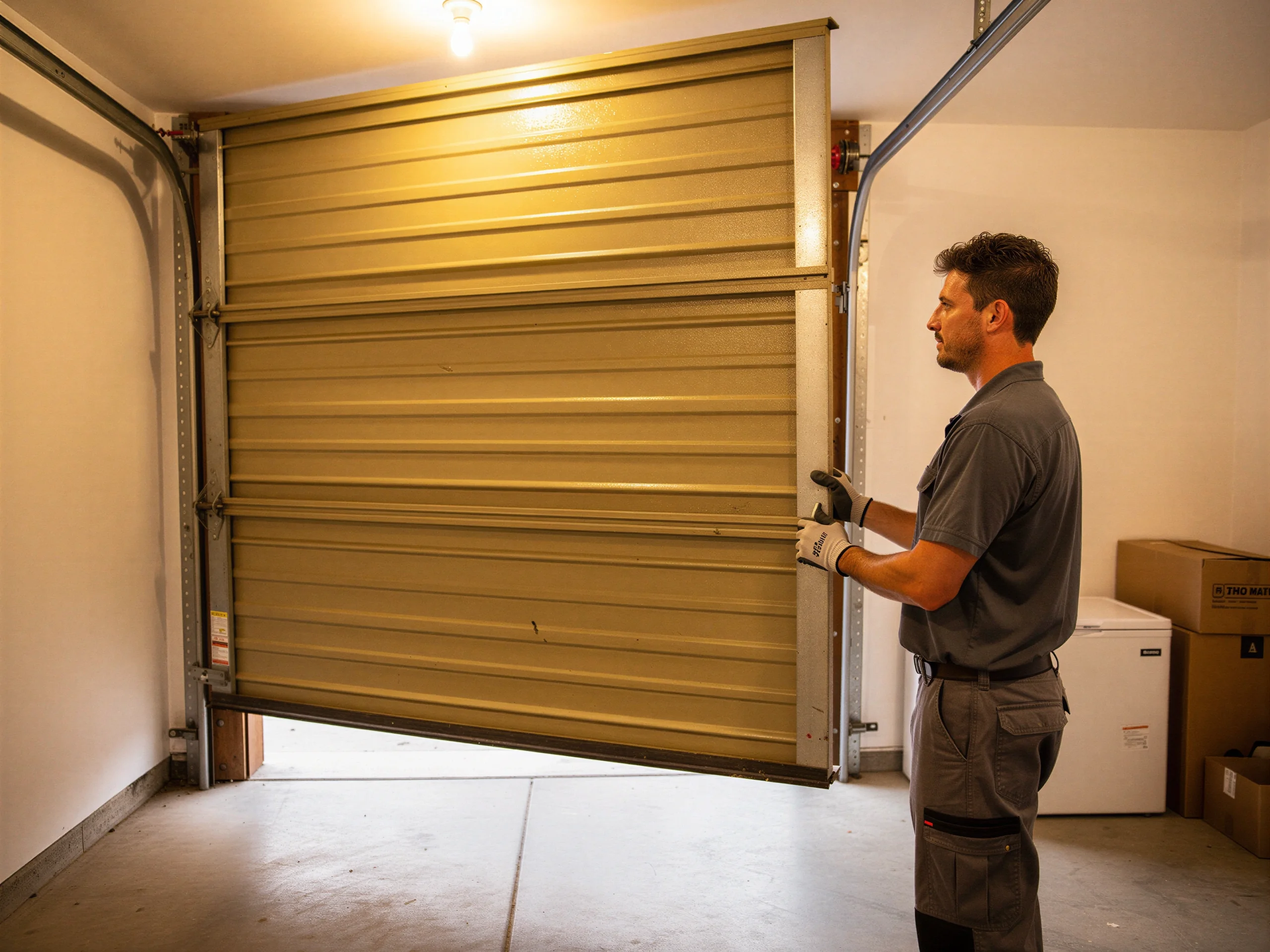
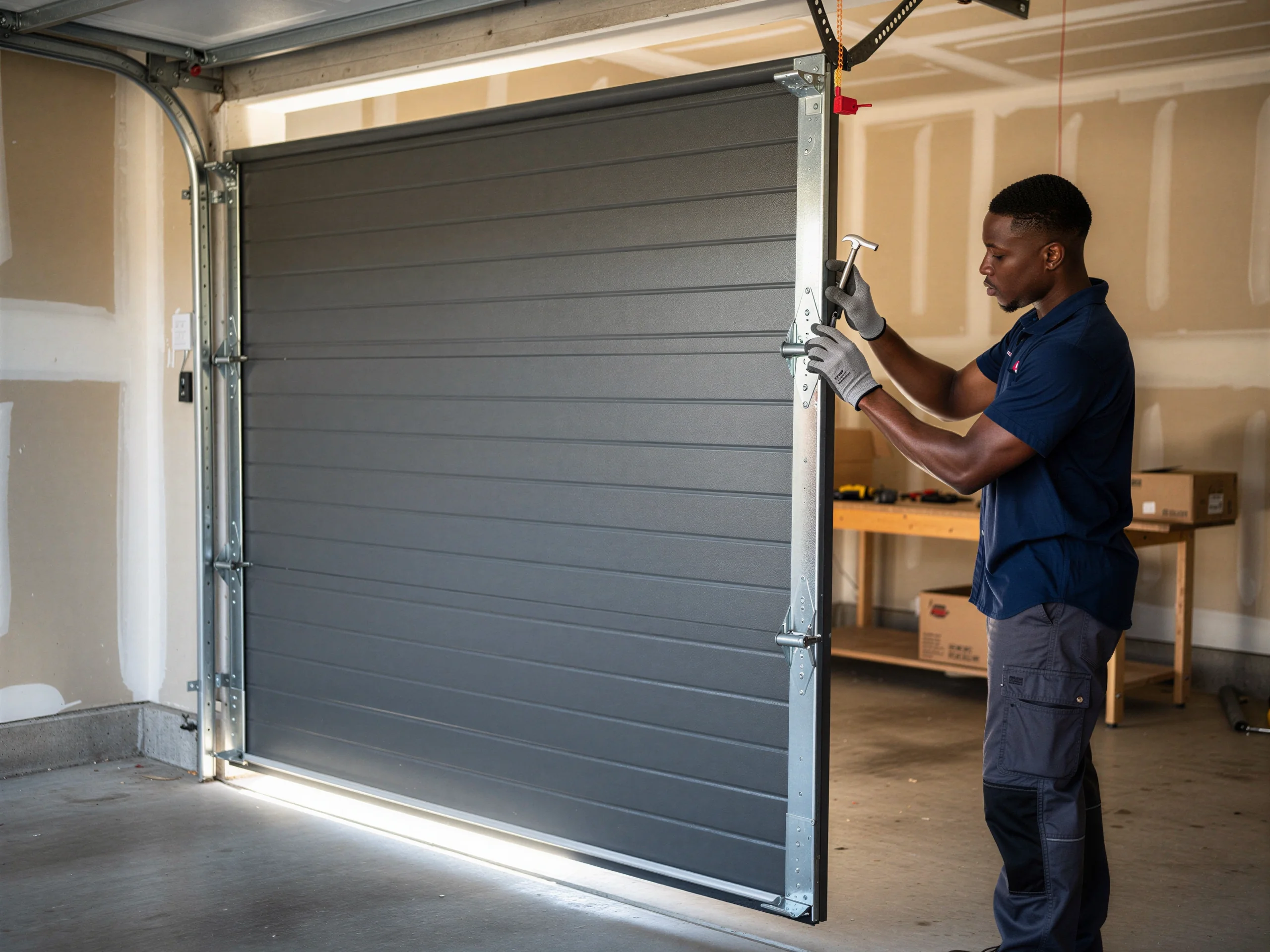
A full new-door install on a 1981-era opening means pulling the old panels and track, checking the jamb for square, and often re-anchoring the vertical tracks since forty years of settling rarely leaves them plumb.
Spring sized to weight
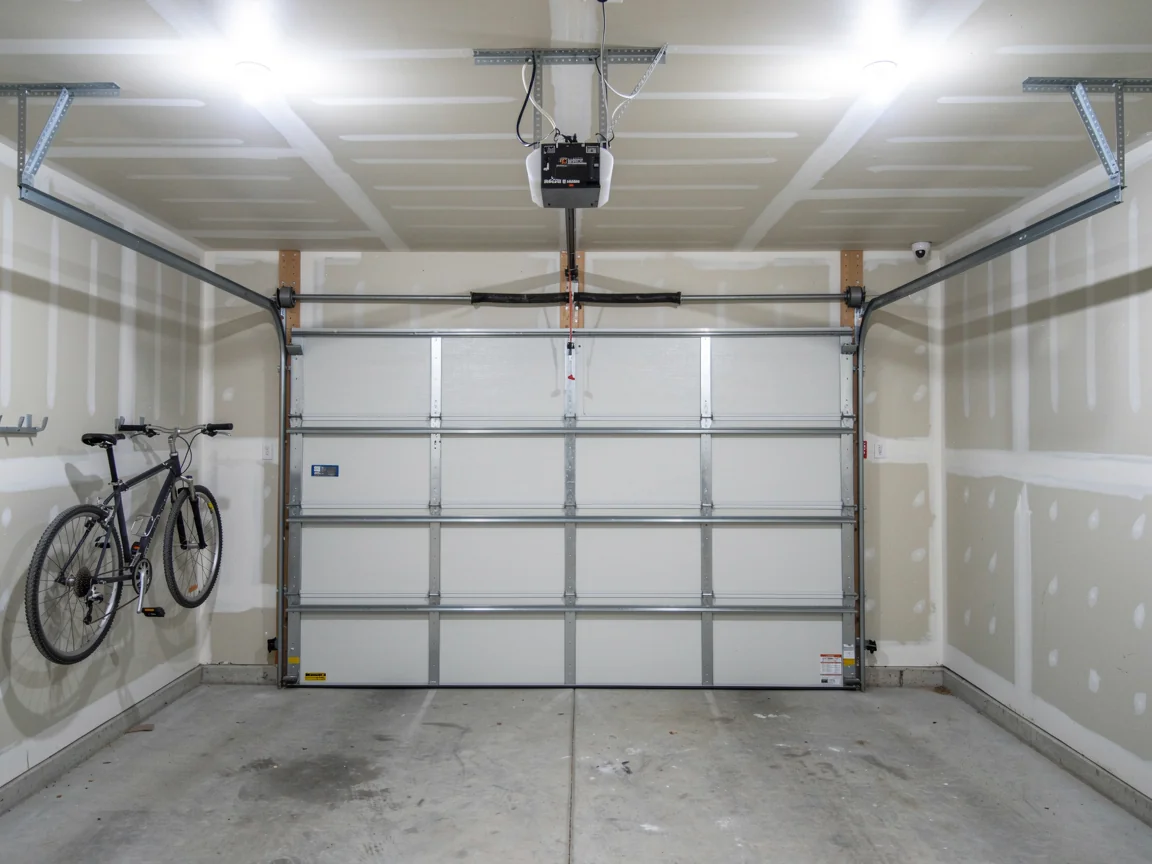
The new torsion spring gets sized to the door's actual weight, not a generic chart number, which matters more on insulated doors that run heavier than the single-layer steel they're replacing. Opener brackets usually need to be relocated for a new rail length, and if the house still has the original 1980s wiring to the wall switch, that gets replaced rather than reused.
Weeks-long custom lead times
One limitation worth saying plainly: custom sizes and certain wood or carriage-style doors carry a manufacturer lead time measured in weeks, not days, and that wait is outside our control once the order's placed.
Stock size for speed
If you need the garage usable again right away, ask about a standard-size door in stock rather than a custom order - it installs faster and still holds up fine in a cold, severe climate when it's properly insulated and weatherstripped.
Talk to a local pro
Garage door service in Leesburg?
Same-day service with honest, upfront quotes.