Where This Job Goes Sideways
Great Falls is a smaller piece of our service area than some of the towns we cover, with around 4,970 households, but that doesn't make the work here simpler - it just means fewer doors, built in a narrower window.
First-wave torsion systems
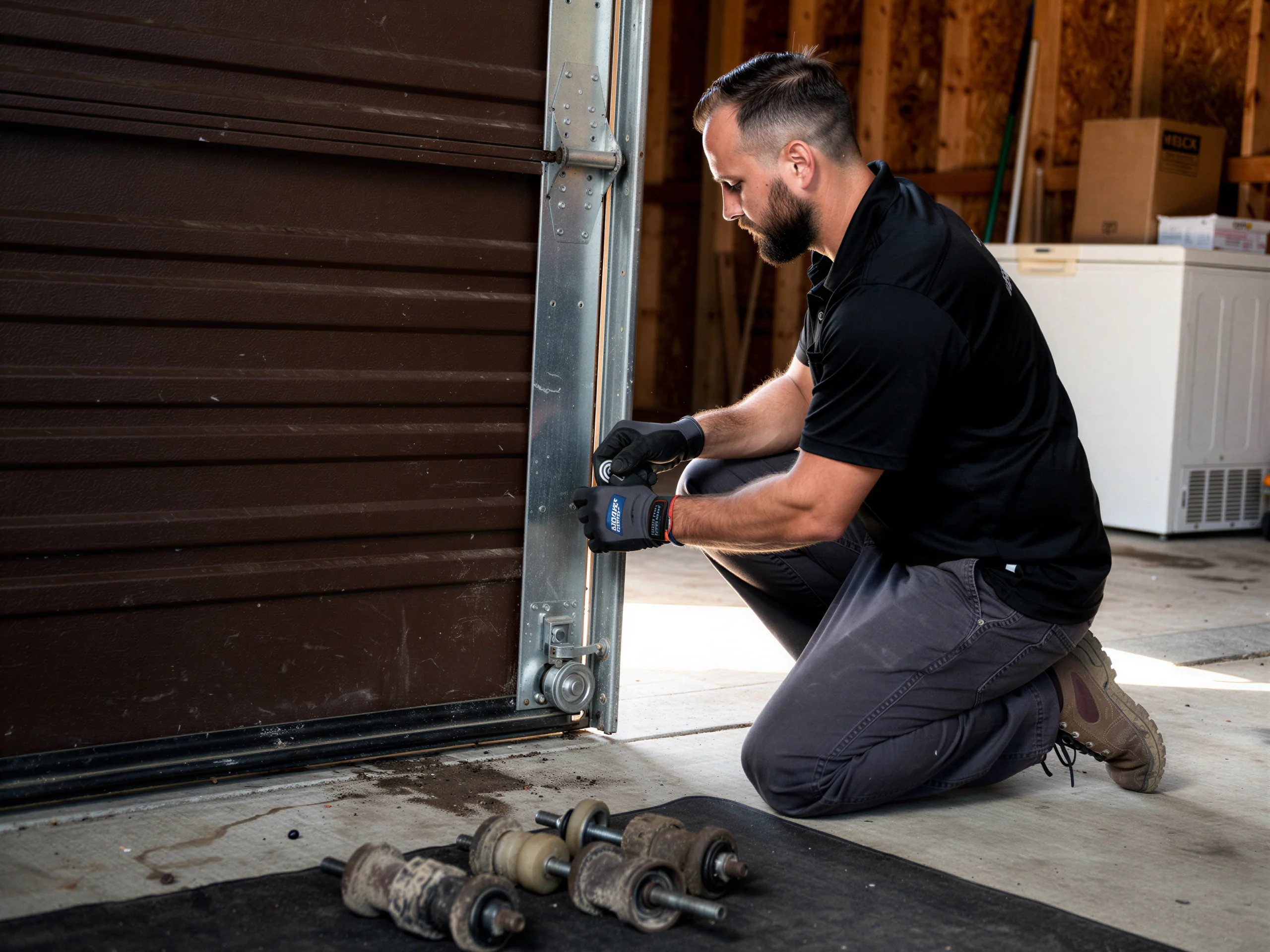
Most houses on this side of the county went up around 1985, which puts a lot of garage doors here on openers and spring systems from the first wave of residential torsion setups. Those systems are now at the age where the rubber rollers crack, the galvanized coating on the torsion spring starts to pit, and the opener's logic board starts dropping the close-limit setting at random.
Brittle weatherstripping
We also work in a cold-climate zone, which matters more than people think for a 1980s door. The weatherstripping on those older bottom seals was never rated for the kind of repeated freeze-thaw cycling we get, so it hardens and cracks by year 30 or so - right about now for a lot of these doors.
Cold-air rattle
When that seal goes, cold air gets behind the bottom panel and the metal contracts unevenly, which is when you start hearing a new rattle on cold mornings that wasn't there in October.
Drift burns out motor
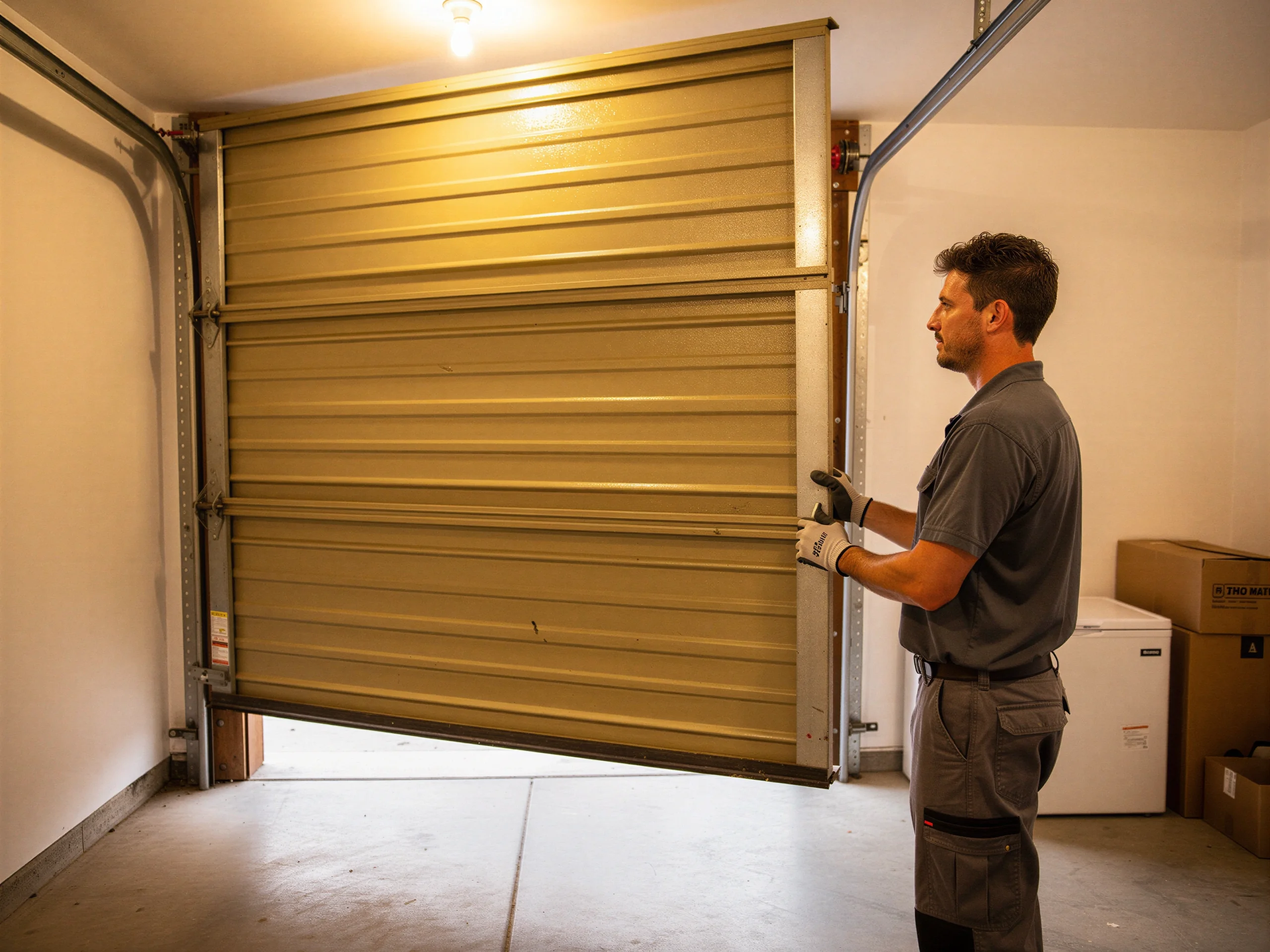
The failure we see most in homes this age isn't a snapped spring out of nowhere - it's a slow drift in balance that the owner never notices until the opener motor starts straining and burns out trying to lift a door that's no longer properly counterweighted.
Getting It Booked In
We run maintenance calls in Great Falls out of our Leesburg base, about 15 miles up the road, so this isn't a job we can fit in on an hour's notice the way we might closer to home.
Tune-up lead time
If you're booking a tune-up rather than dealing with a door stuck mid-cycle, give us a little lead time and we'll get a truck out on a day that works for both of us.
Scheduled maintenance owners
Because household income in this part of our coverage area runs high - the median here is over $250,000 - we see a fair number of owners who maintain on a schedule rather than waiting for a failure, and that's the right call on a door this age. A yearly tune-up catches the spring wear and track misalignment before it turns into an opener replacement.
Share known faults
If you already know what's wrong - a specific panel, a dead opener, a cable that's frayed - tell us when you call so we bring the right parts on the truck. Driving back to Leesburg for a part we didn't know we needed adds a day to the job, and that's avoidable most of the time.
Can You Do This Yourself
Some of this is reasonable for an owner to handle. Wiping down and lubricating the rollers and hinges with a garage-door-specific lubricant, checking that the bottom seal isn't cracked, and visually checking the cables for fraying are all things you can do with the door closed and the opener unplugged.
Leave the spring alone
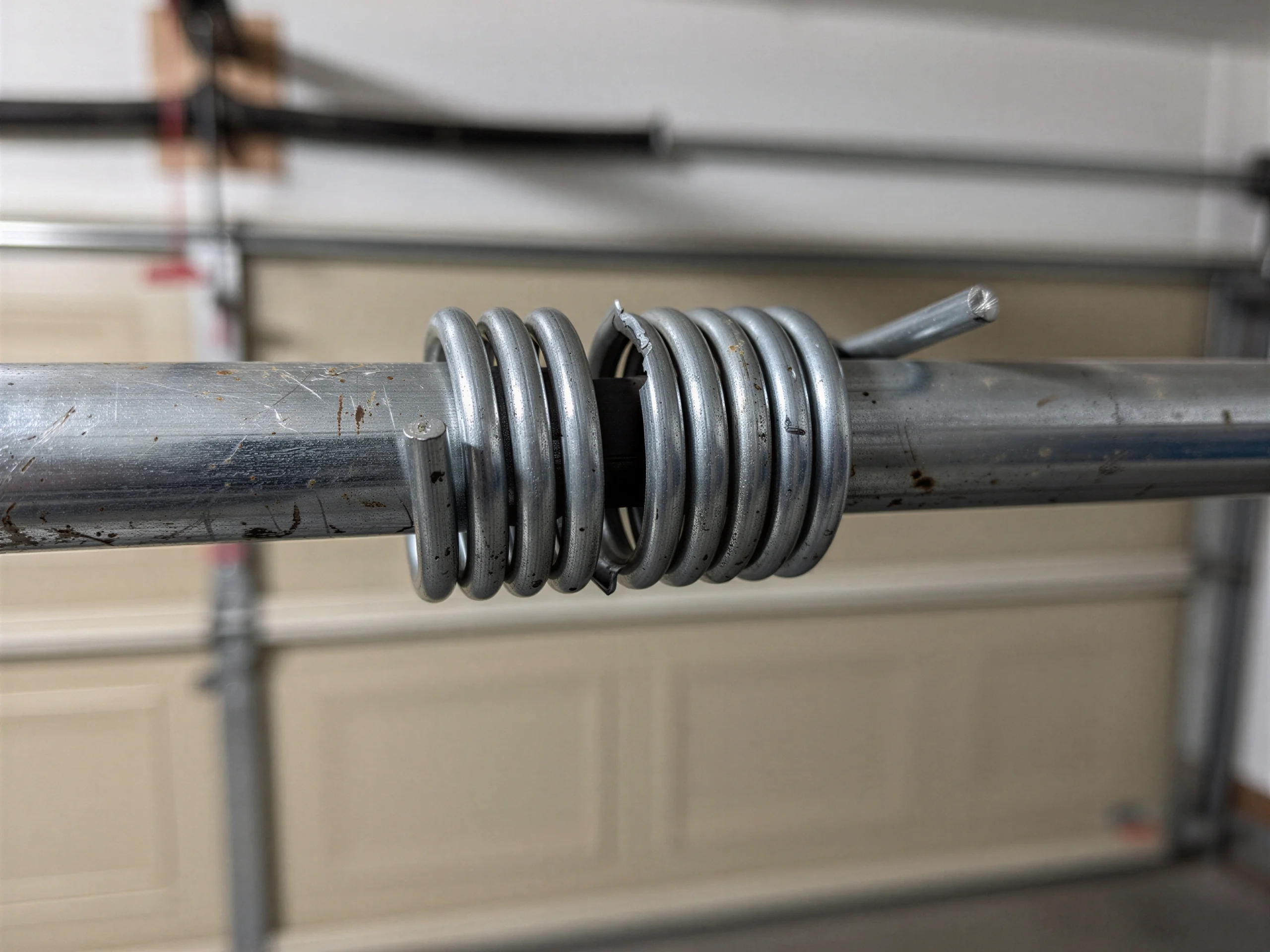
What you shouldn't touch is the torsion spring itself. On a door built around the mid-1980s, that spring has been under load for close to 40 years, and the winding cones on older hardware don't always match current replacement bars.
Spring tension injury risk
A spring under tension that lets go while someone's adjusting it can break a wrist or worse - this is the one place where DIY and garage doors genuinely don't mix.
Replace aging opener
We'll also say plainly: if your opener is original to a mid-80s install, replacement usually makes more sense than repair once the motor starts failing. Parts for openers that old are getting hard to source, and a new opener with modern safety sensors costs less over time than chasing parts for one that's done.
How Long It Takes
A standard maintenance visit - lubrication, hardware inspection, spring tension check, track and roller condition, opener safety-reverse test - runs about the same length of time regardless of which town we're in, but what we find on arrival differs by housing age. On a door from the mid-1980s we typically spend more of that visit on the spring and the opener logic board than we would on a newer door, since those are the parts most likely to be past their rated life.
If everything checks out, you're looking at a routine visit. If we find a spring near the end of its cycle count or an opener board that's failing intermittently, we'll tell you on the spot and give you the option to handle it that day or schedule a follow-up, since that's a bigger job than the tune-up itself. We don't pad a maintenance call into a sales pitch, but we also won't tell you a spring is fine if it's visibly pitted and due.
Talk to a local pro
Garage door service in Leesburg?
Same-day service with honest, upfront quotes.